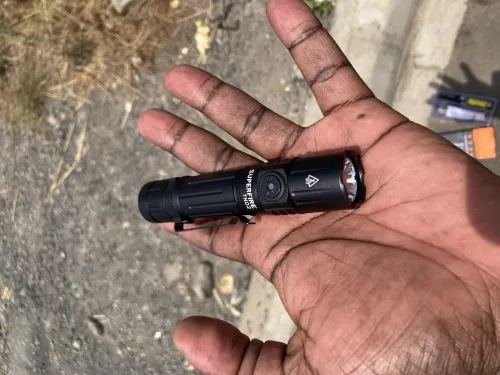
To choose a headlamp in Kenya, match the light to how long you will wear it and where you will use it, then read the five numbers that matter: lumens, beam range, weight, battery type and water rating. This guide walks you through each one, then applies them to six headlamps so you can see how a 1200-lumen model differs from a 44g one. By the end you should know which type suits your work, your evening walk or your camping trip.




What do lumens and beam range actually tell you?
Lumens tell you how much light comes out of the lamp. Beam range tells you how far you can still see useful detail ahead.
A light with more lumens is not automatically better for close work. Too much brightness at arm's length washes out detail and drains the battery. For reading a meter box or fixing a socket, you want a low or medium setting that stays steady.
Beam range matters on open ground. The Wuben H1 reaches 125m and the SUPERFIRE X30 reaches 130m. The Akko Star covers 30m, which suits a tent, a path or a room.
Check before you buy:
- Low and medium settings, not just the top figure
- Range in metres, and whether the head tilts and by how much
- Coloured auxiliary light if you want to keep night vision
Once you know your range, the next question is how the light sits on your head.
How much does weight and fit matter on a long job?
Weight matters more than most shoppers expect. A heavy lamp on a thin strap starts to pull after an hour.
The WUBEN H3 is 44g, the SUPERFIRE X30 is 58g and the SuperFire TH04-U is 87g. Heavier builds usually mean a bigger cell inside, so the weight buys you runtime.
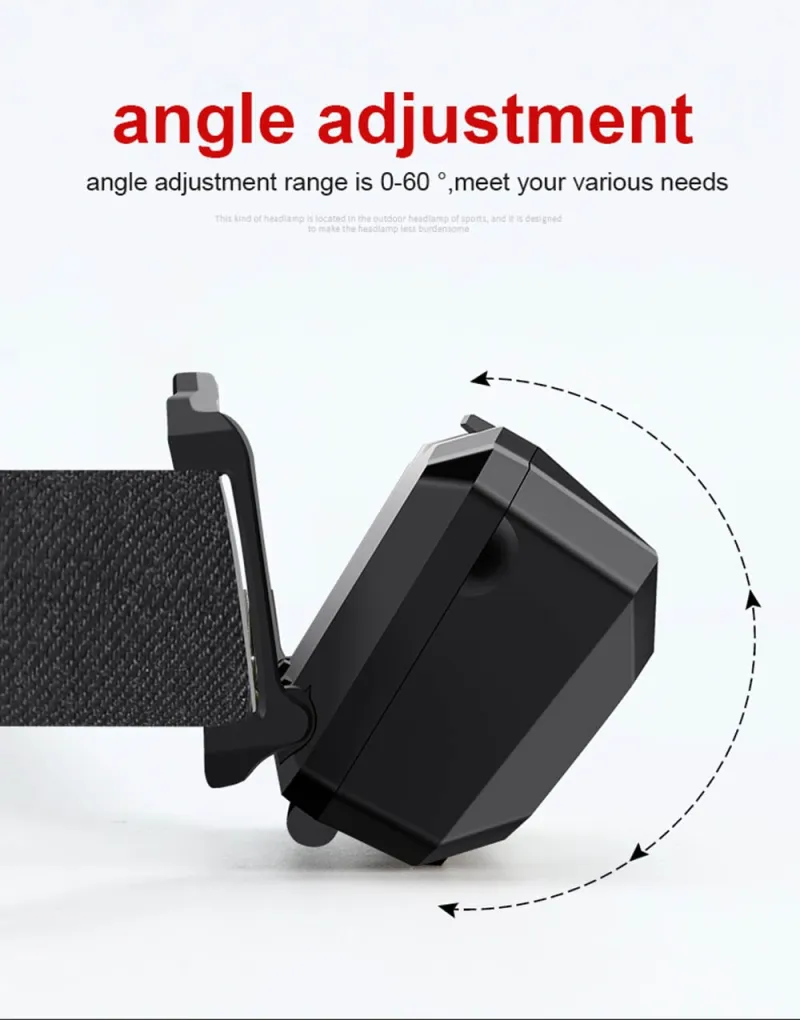
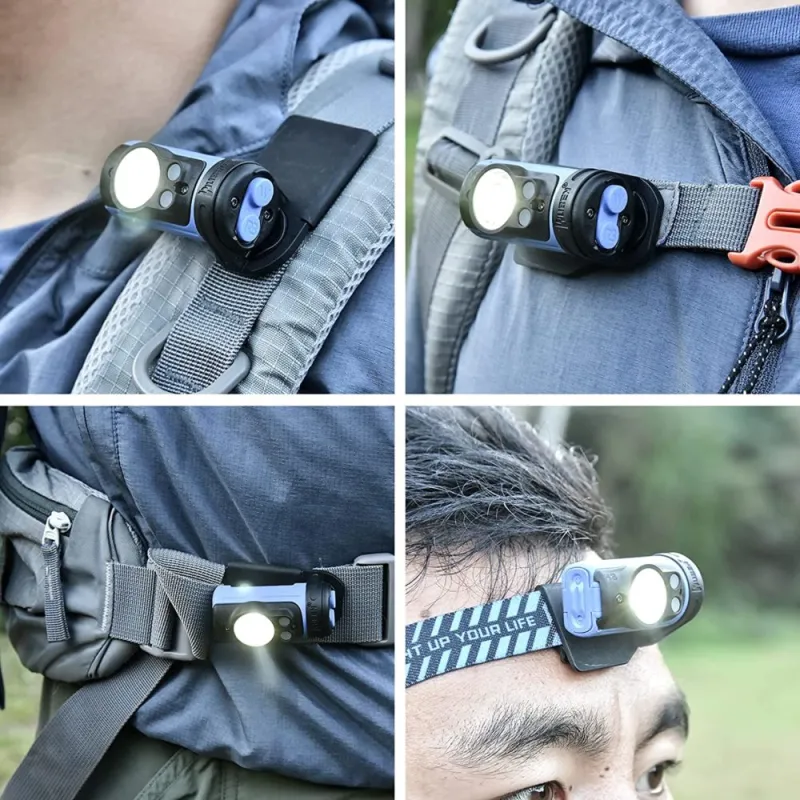
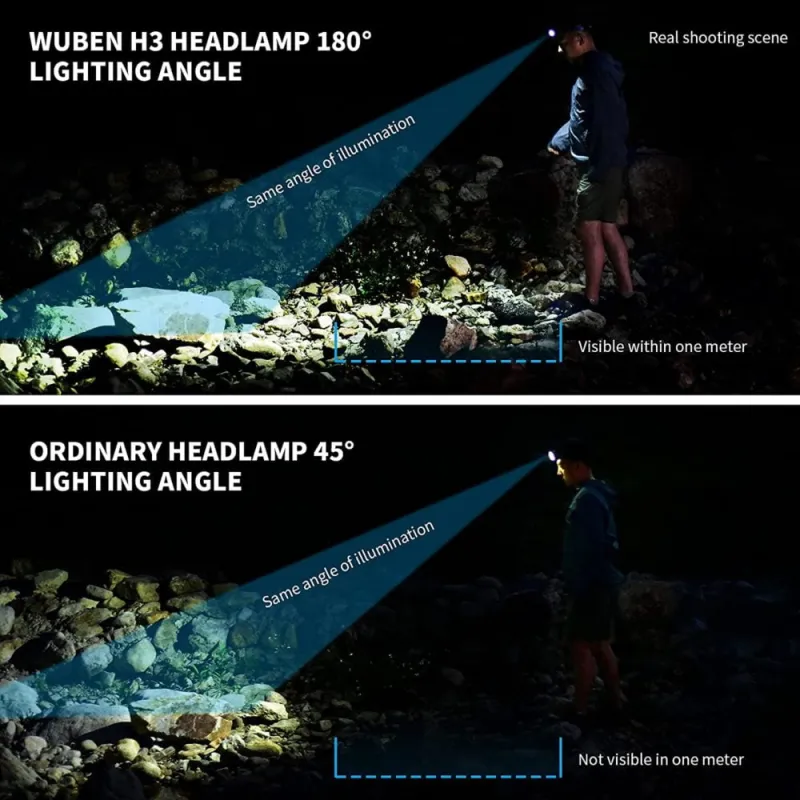
The Wuben H1 tilts through 180 degrees, the SUPERFIRE X30 adjusts 45 degrees, and the WUBEN H3 uses two rotating shafts rather than a single hinge. That angle range decides whether you can aim down at your hands without moving the strap.
Fit is settled. Next, the battery decides how your evening ends.
Rechargeable or standard batteries: which suits your routine?
Rechargeable is the easier routine if you have power at home. Standard batteries win if you are far from a socket.
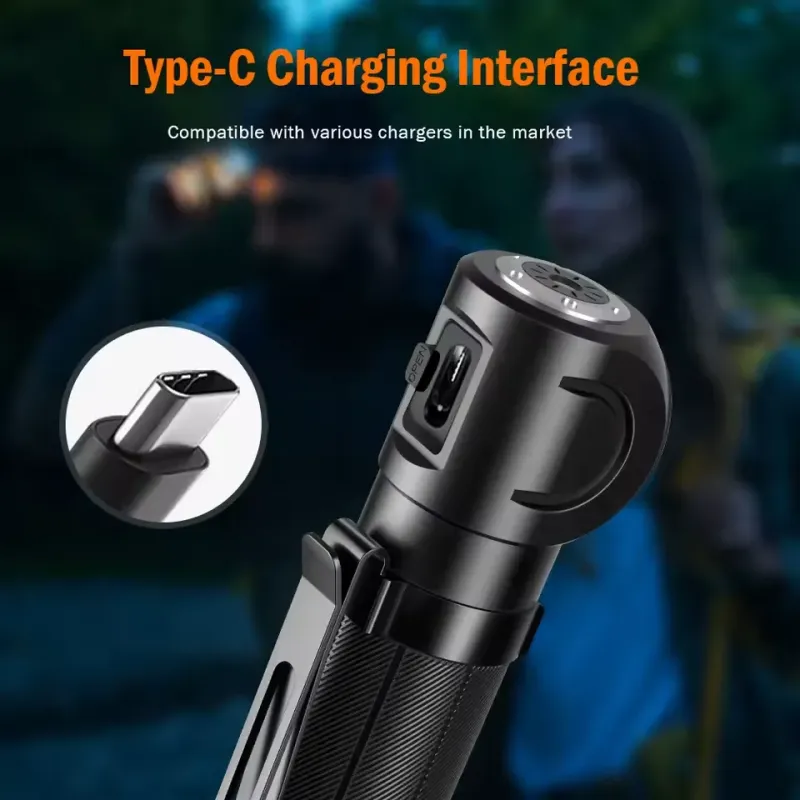
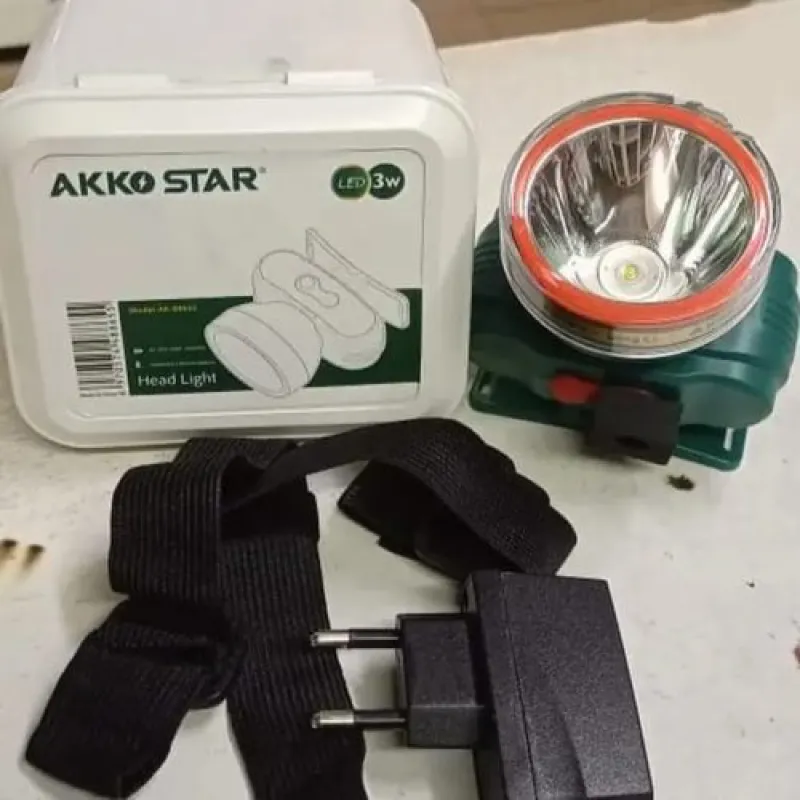
Wuben H1 packs a 2600mAh 18650 cell and includes a charging cable. The SUPERFIRE X30 uses a built-in 1200mAh battery charged by Type-C, and the SuperFire TH04-U runs on a 21700 with a USB-C cable in the box. The Akko Star has a 1200mAh built-in battery charged from an AC plug but no cable included.
The WUBEN H3 is the odd one out: it takes three AAA batteries, included, and is not rechargeable. That is a strength on a multi-day trip where you can swap cells anywhere, and a nuisance if you expected to plug it in.
Runtime figures are quoted on different settings, so read them next to their mode. The Wuben H1 states up to 500 hours, the SUPERFIRE X30 up to 6 hours on a 1200mAh cell, the Akko Star 4 to 6 hours, and the WUBEN H3 up to 105 hours on low.
Power is only half the story when the weather turns.
What water rating do you really need?
IP68 is the highest rating here: dust tight and rated for water immersion, not just rain. The Wuben H1 carries it.
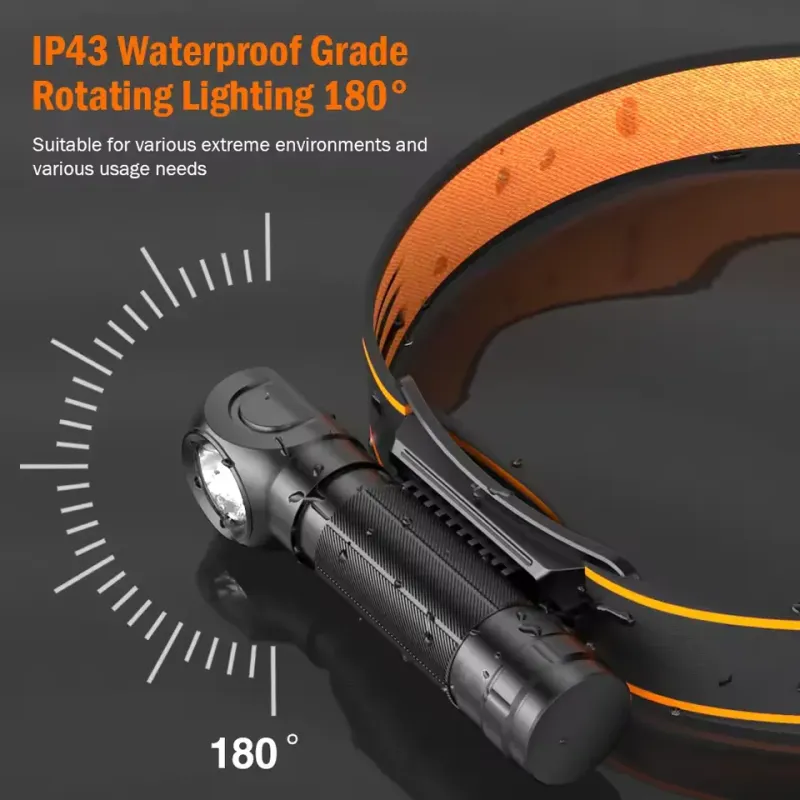
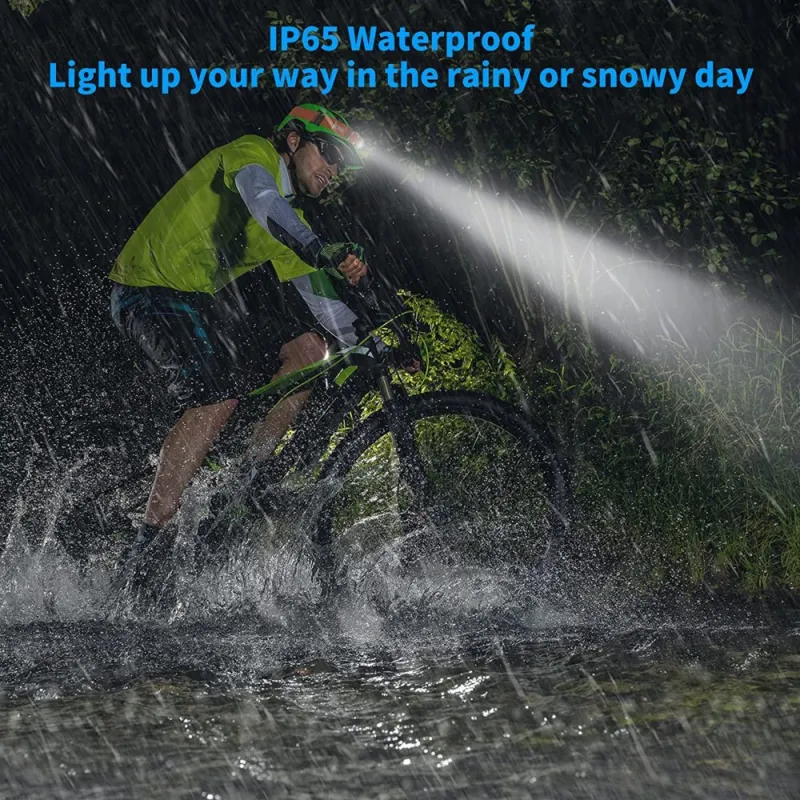
The SUPERFIRE X30 is IP54, dust protected and splash resistant, and the SuperFire TH04-U is IP43. The WUBEN H3 is IPX4, which handles light splashes. The SUPERFIRE G19-S is IPX6, rated for rain and strong splashes.
For a farm, a night patrol or a rainy season commute, IP68 removes doubt. For a tent and a dry store, a splash rating is enough.
Now the six models, starting with the most protected.
Wuben H1: the one for heavy weather
The Wuben H1 is for readers who work outdoors in rain and want the beam to reach. Its OSRAM P9 LED gives 1200 lumens and a 125m beam, with an aluminium alloy body and IP68 sealing.
Seven white modes run from eco to turbo, plus strobe and SOS, and it remembers the last brightness you used. Red and green auxiliary light let you signal or keep night vision without the white beam. A lock function stops it switching on inside a bag.

Actual product photos ofWuben H1 Headlamp


SUPERFIRE X30: red light and a motion sensor
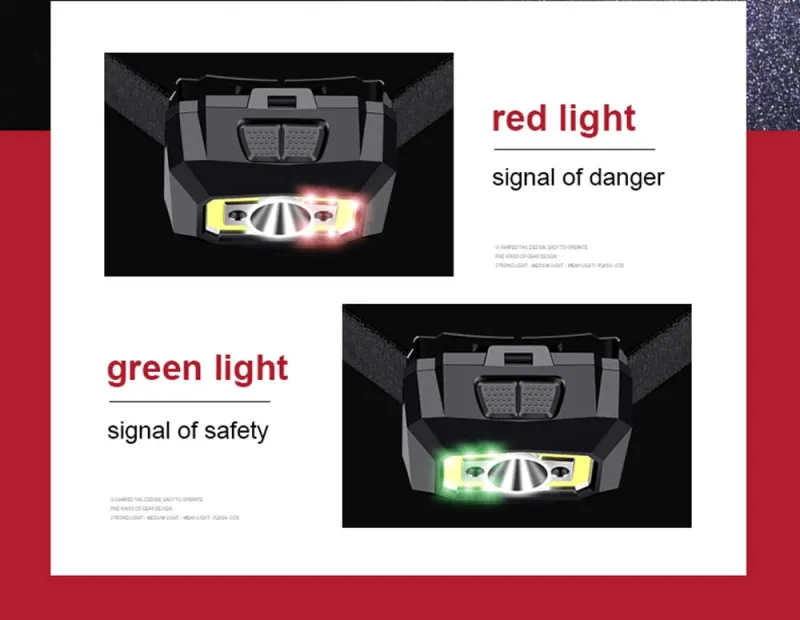
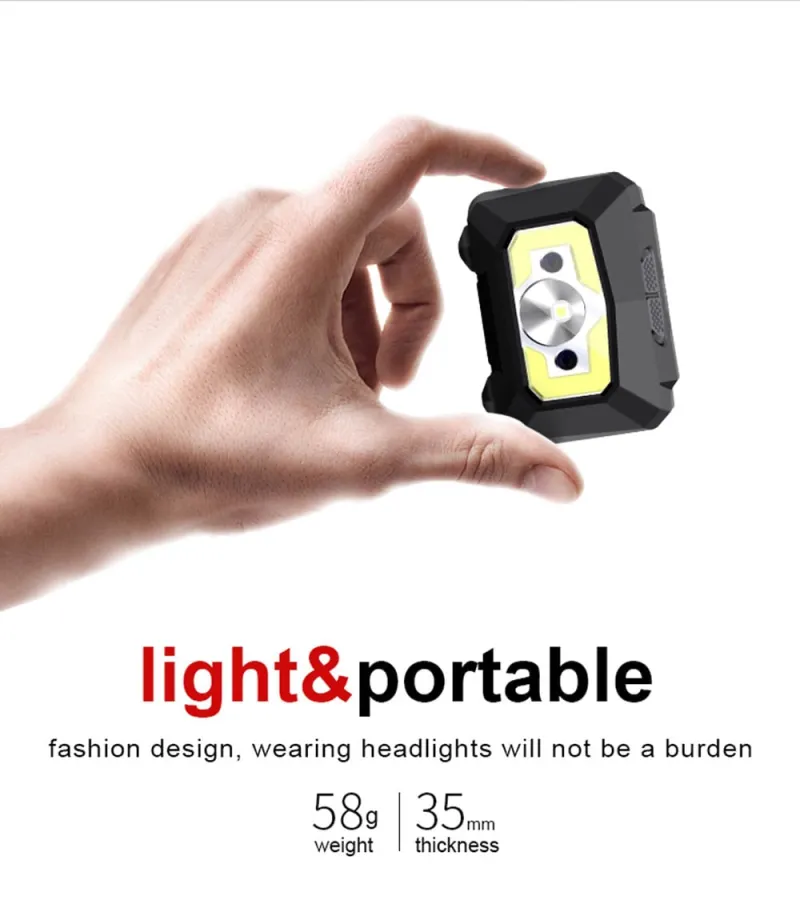
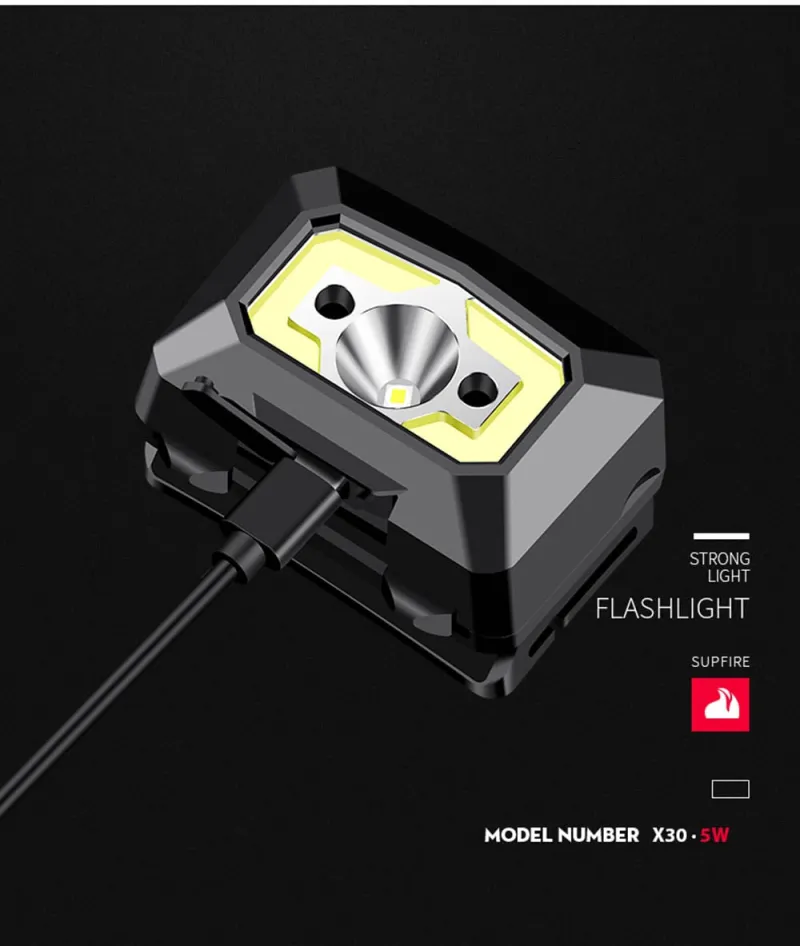
The SUPERFIRE X30 suits wildlife watching, astronomy or sharing a tent, where red light protects night vision. It gives 500 lumens and a 130m range from an XPG spotlight and COB floodlight.
Five modes cover main light, COB, both together, red light and red strobe. A push button and sensor switch let you wave a hand instead of finding the button in the dark.

SuperFire TH04-U: one light, two ways to hold it
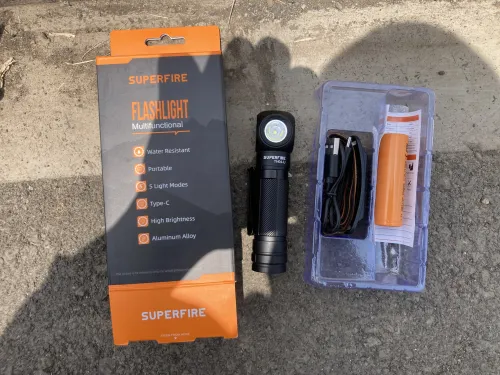
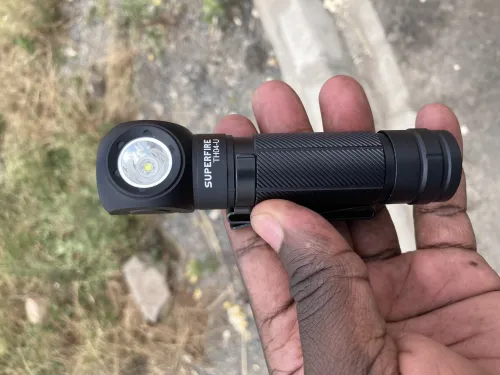
The SuperFire TH04-U is for electricians and mechanics who only need hands-free light for part of a job. The headband detaches in seconds and the same light works as a handheld torch.
It gives 500 lumens and a 116m beam from a 5W LED, around 4.3 hours on high from a 21700 battery, with USB-C cable included. At 87g and IP43, it is a work light rather than a rain light.
Actual product photos ofSuperFire TH04-U 2-in-1 Rechargeable
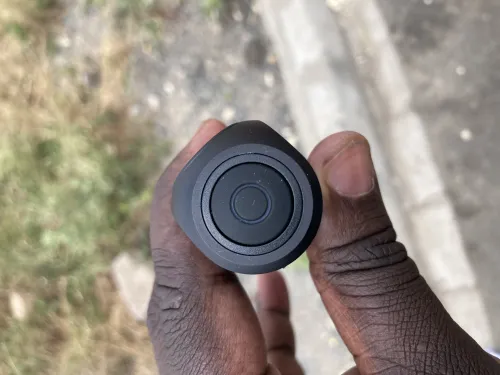
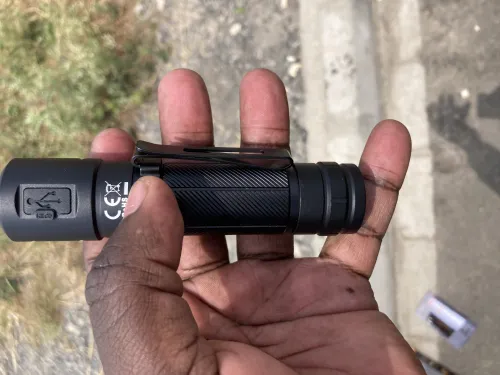

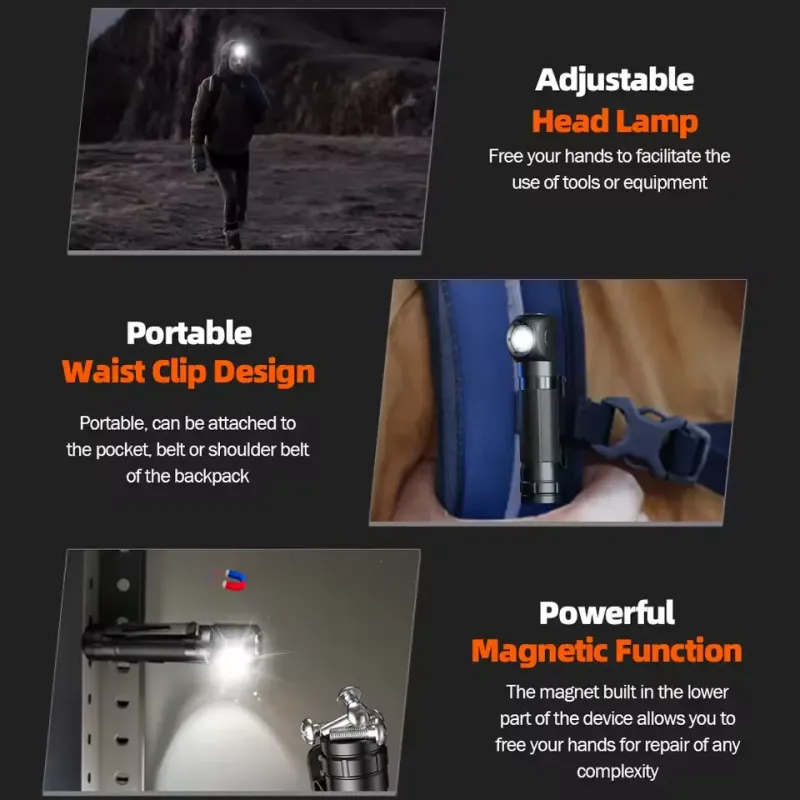
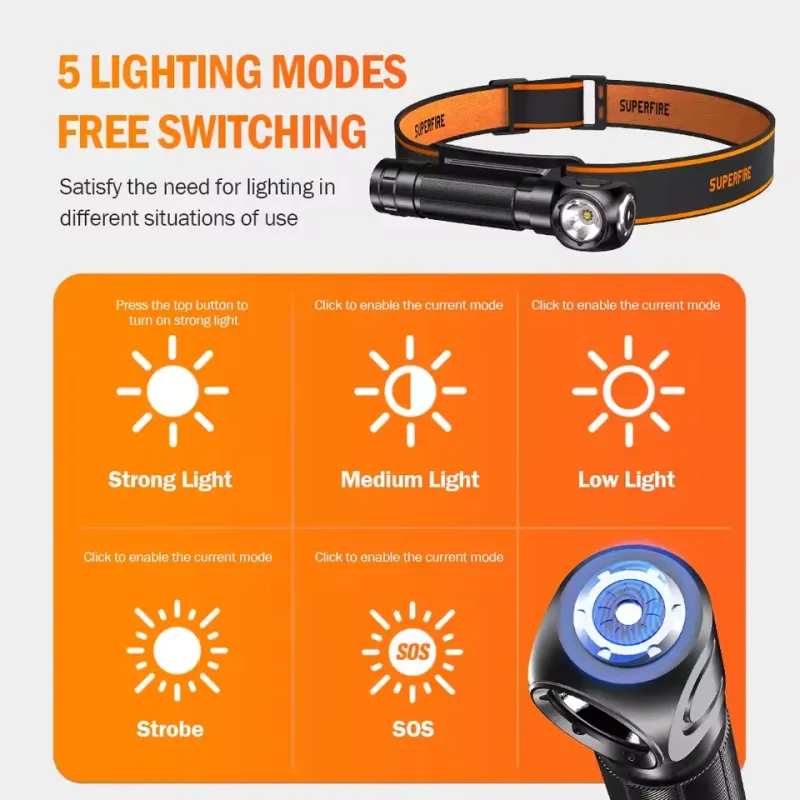
SUPERFIRE G19-S, Akko Star and WUBEN H3
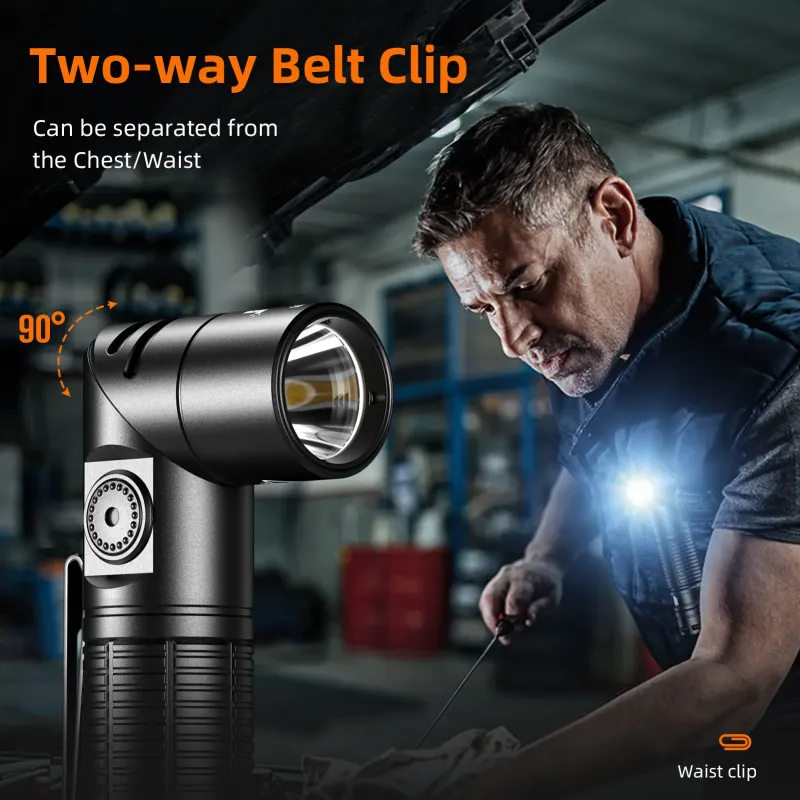
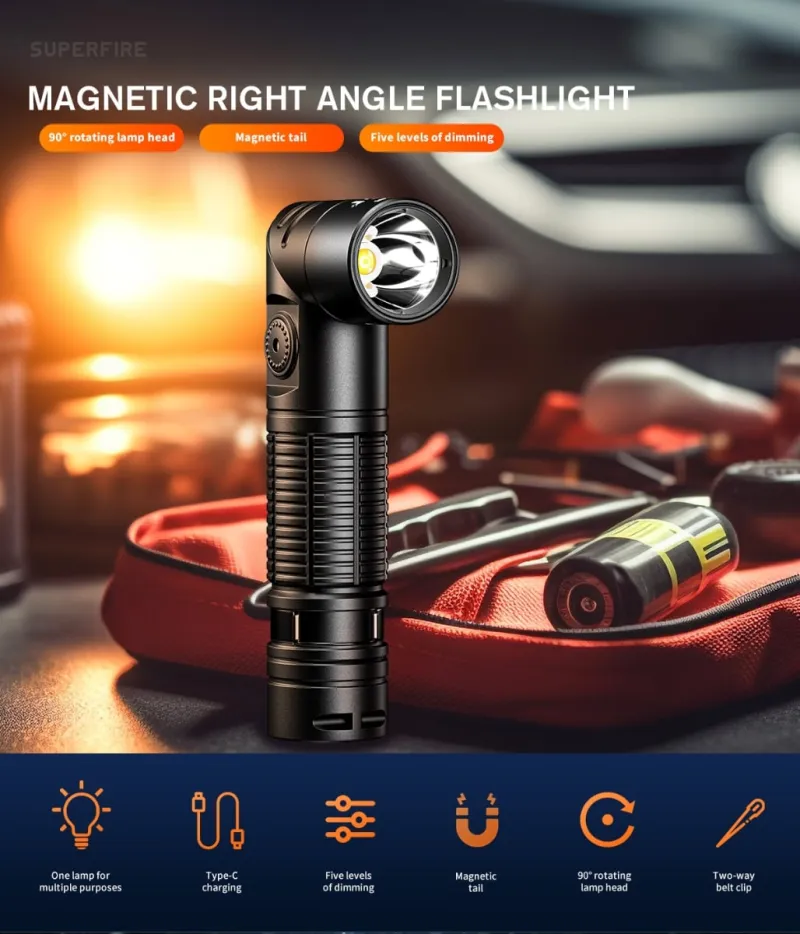
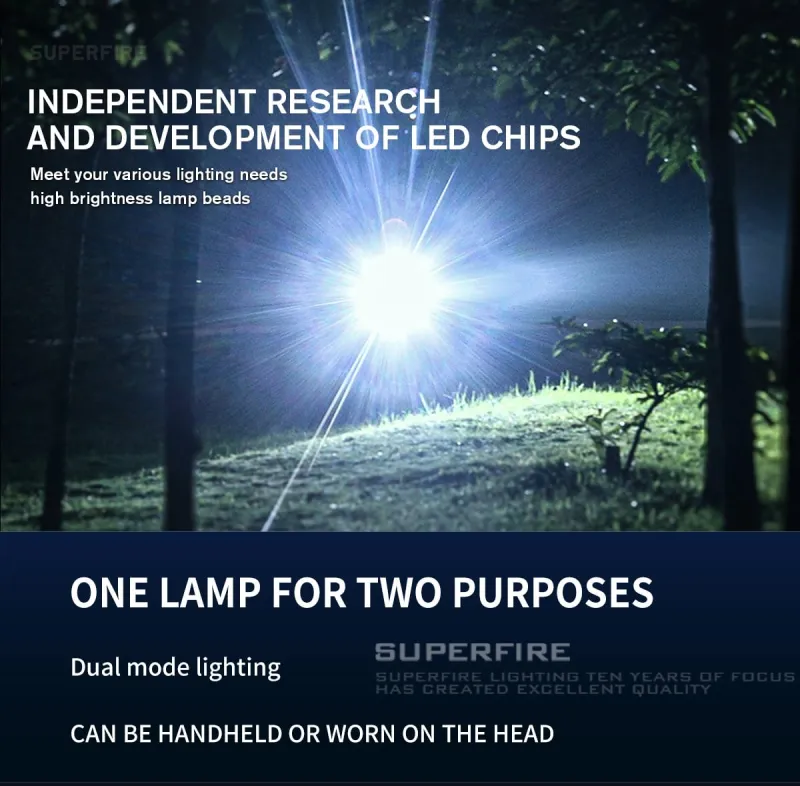
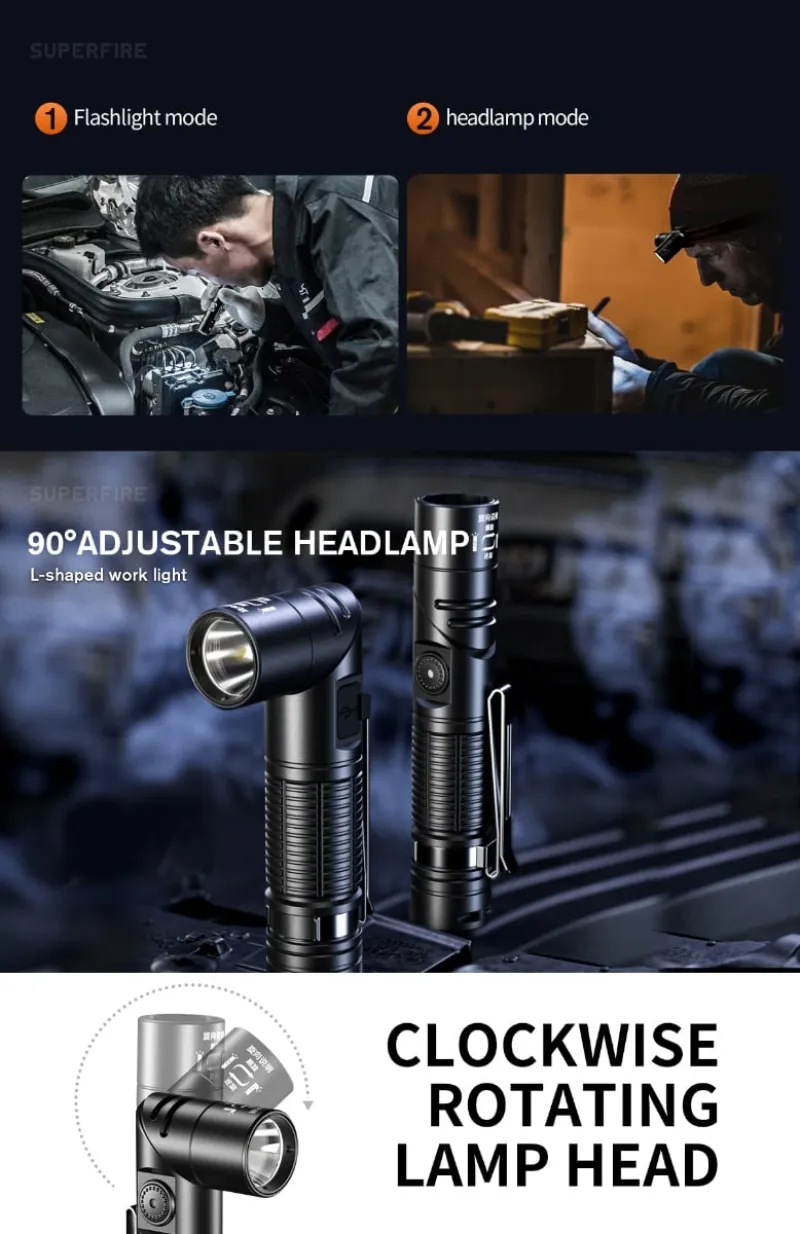
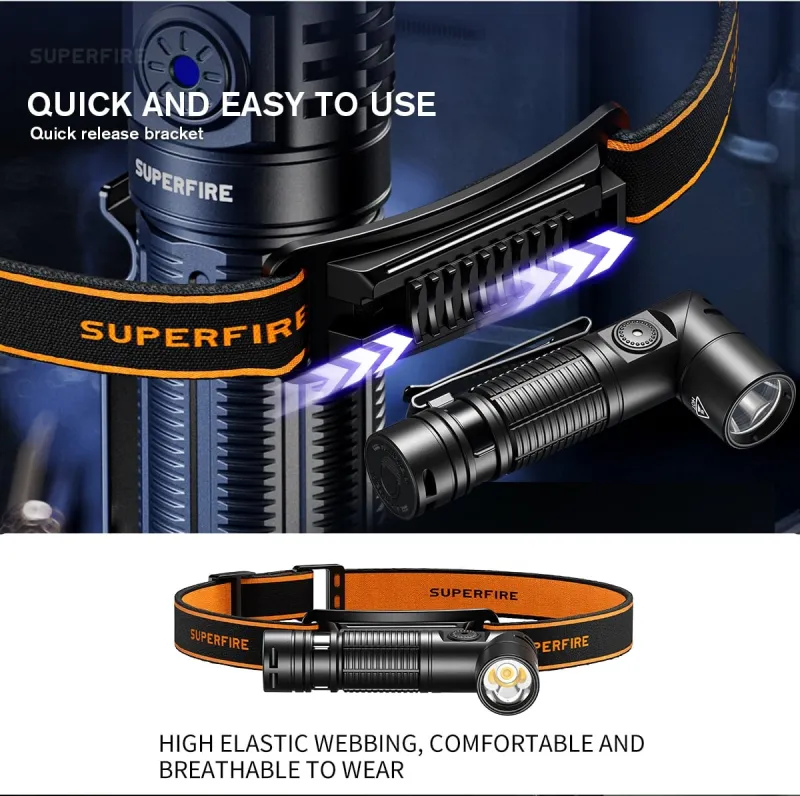
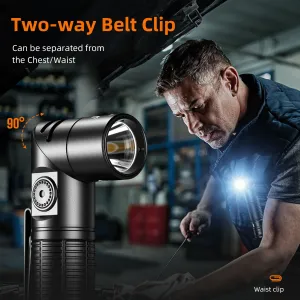
The SUPERFIRE G19-S is a flashlight that doubles as a headlamp. A magnetic tail sticks to metal surfaces, the head turns 90 degrees, and it gives 360 lumens over 160m with Type-C charging and a 14500 battery.
The Akko Star is the simple starting headlamp. Low and high modes, 200 lumens, a 30m range and 4 to 6 hours from a built-in 1200mAh battery, in a light ABS body.

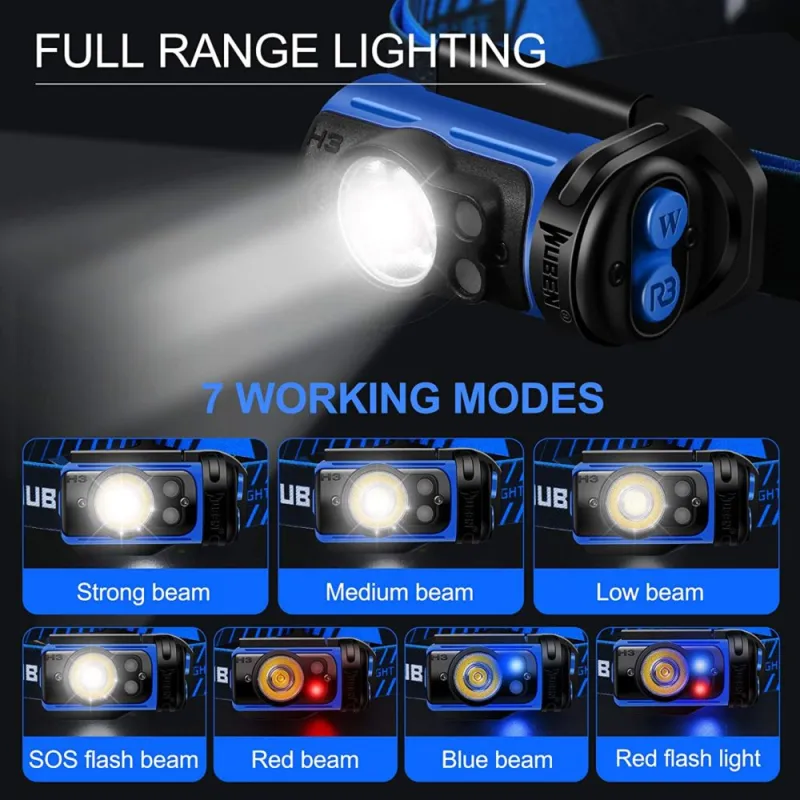
The WUBEN H3 is for long trips where weight and runtime beat output. At 44g it gives 120 lumens over 53m, up to 105 hours on low, with red and blue auxiliary lights. It is not rechargeable and uses AAA cells.

Between them, the choice comes down to four habits. Here is where each one fits.
For more options across the range, browse the full headlamp range or read the headlamp shortlist for work, cycling and camping.
You now have the five numbers that decide a headlamp: lumens, range, weight, battery and water rating. Start with the Wuben H1 if you need reach and IP68, or the Akko Star if you want simple light for a tent.
See the Wuben H1KSh 6,000 · In stock
Where you would use it
- Night patrol Keep both hands free to open a gate or hold a radio while the beam lights the path ahead.
- Tent and camp Hang light in a tent or read a map after dark without holding a torch in your teeth.
- Fixing a socket Tilt the head down and aim light exactly where your hands are working under a sink or board.
- Evening walk Light the road shoulder on a walk home when street lighting is thin or off.
- Farm rounds Check livestock or a fence line after dark with a beam that reaches across open ground.
Frequently asked questions
It depends on the job. About 120 to 200 lumens suits close work and a tent, while 500 lumens and above reaches further on open ground; the Wuben H1 gives 1200 lumens and the Akko Star 200 lumens.
Rechargeable is easier if you have power nearby, while AAA cells can be swapped anywhere. The Wuben H1 recharges from a cable, and the WUBEN H3 runs on three AAA batteries and is not rechargeable.
IP68 means dust tight and rated for water immersion, so it handles more than rain. The Wuben H1 carries IP68, while the SUPERFIRE X30 is IP54 for splashes and the Akko Star lists no water rating.
Yes. Red light helps preserve night vision, and both the SUPERFIRE X30 and the Wuben H1 offer red light alongside the main white beam.