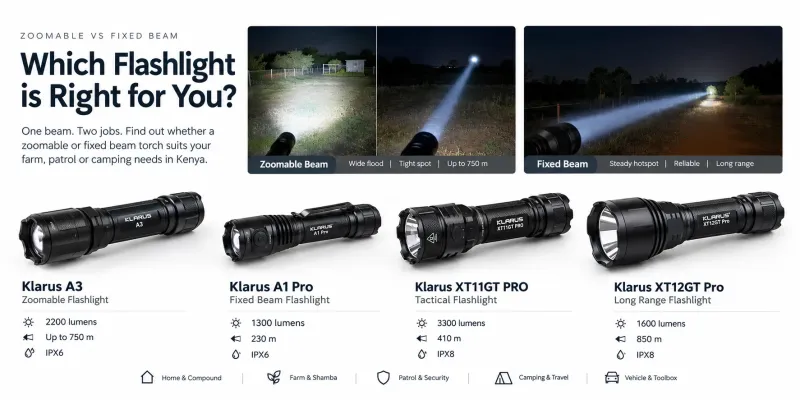
If you have ever pointed a torch at something far away and seen only a bright patch of grass, or tried to fix a pump at your feet while a tight beam lit the fence instead, you have met the zoom versus fixed beam question. Choosing a zoomable flashlight in Kenya comes down to one thing: whether you need one torch to do two jobs, or one torch to do a single job very well. This guide walks through both designs using real situations, from a shamba at dusk to a night patrol and a weekend camp.
Key takeaways
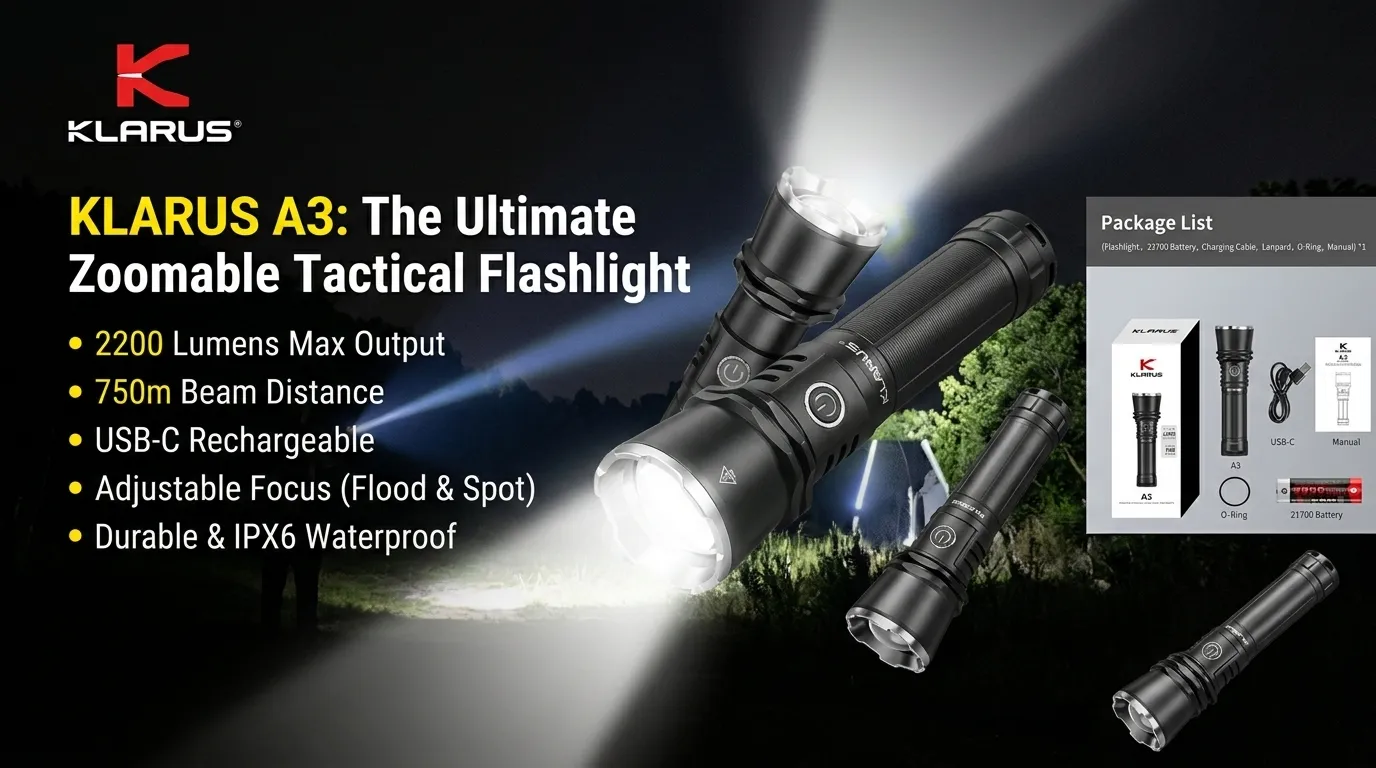
- A twist zoom torch like the Klarus A3 moves between wide flood for close work and a tight spot that reaches up to 750 m.
- Fixed reflector torches put more of their light into a steady, focused hotspot and often feel simpler to use under pressure.
- Choose zoom for mixed work around the home, farm or campsite; choose fixed for patrols, long fields and open ground.
- Lumens tell you how much light you get, beam distance tells you how far it carries. You need both numbers to judge a torch.
What does a zoom beam actually do?
A zoom torch has a head you twist or slide, which moves the lens relative to the LED. Twist one way and the light spreads into a wide flood that covers the ground around your feet and the wall in front of you. Twist the other way and the same light squeezes into a narrow spot that punches much further into the dark.
That flexibility is the whole point. On the Klarus A3 you get 2200 lumens at maximum and a beam that reaches up to 750 m in spotlight mode, and the same torch can flood a store room or a tent. On lower settings it runs for up to 10 hours, depending on the level you pick.
The trade-off is honest: in flood mode the light is spread thin, so it will not throw far, and a zoomed spot is narrow, so you sweep more to search an area. Cheap zoom torches also lose output as the beam narrows. A well-made one keeps a usable hotspot across the range.
How is a fixed reflector torch different?
A fixed torch has a shaped reflector behind the LED, tuned at the factory. You cannot change the beam, and that is the point. The hotspot stays consistent, the spill around it is predictable, and there is nothing to adjust when your hands are full or you are moving.
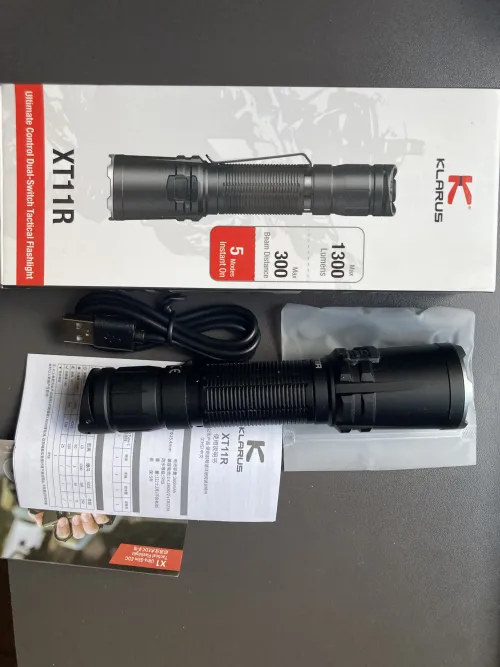
This design suits long distance. The Klarus XT12GT Pro pairs 1600 lumens with an 850 m beam range and 160,000 candela of beam intensity, built around a smooth reflector that concentrates light into a central hotspot. The XT11GT PRO takes a different route, pushing 3300 lumens out to 410 m with a broader, brighter field.
Fixed torches also tend to have fewer moving parts at the head, which matters if the torch lives on a belt, in a vehicle or in the rain.
Which beam suits farm work, patrols and camping?
Think about what you do most with a torch in your hand.
- Farm and compound work: checking a water line, walking a fence, looking into a shed or spotting livestock at the edge of a field. A zoom covers both the close inspection and the long look.
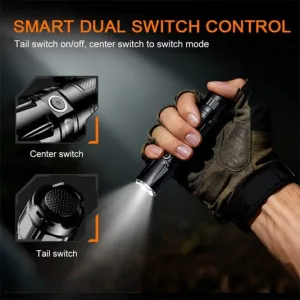
- Night patrols and security: identifying a figure or a vehicle far off, then keeping both hands free. A fixed long-range torch with instant access to Turbo or Strobe earns its place here.
- Camping and travel: lighting a table, reading, finding a tent zip, then scanning the treeline. One zoom torch replaces two lights in a bag.
- Vehicle and toolbox: a simple, tough torch that turns on the same way every time is easier to hand to someone else.
If your nights mix all of these, the zoom wins on versatility. If one job dominates, buy for that job.
Product spotlight
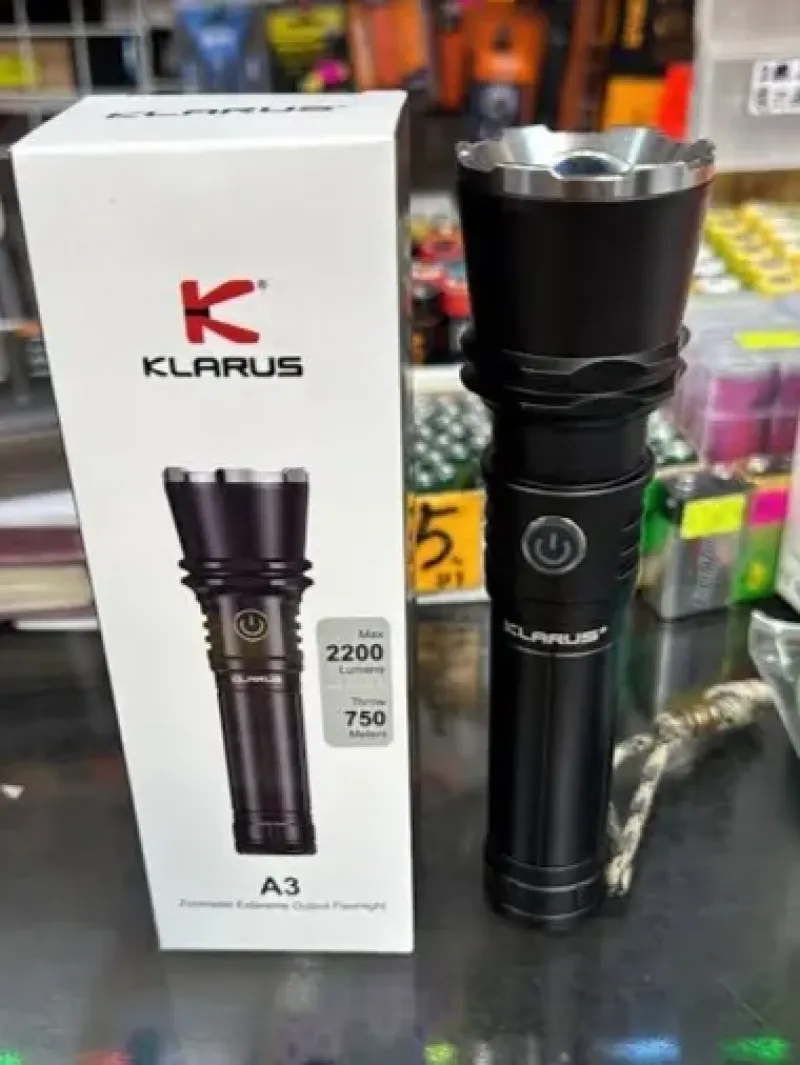
Klarus A3 Zoomable Flashlight
The A3 is the torch for someone who wants one light to cover close work and a long look. Its twist zoom moves between a wide flood and a spotlight reaching up to 750 m, with 2200 lumens at maximum. Power comes from an included 4000mAh 21700 cell charged over USB Type-C, and the aluminium body carries IPX6 water resistance, strobe and SOS modes. The limit to accept: the zoom head is a mechanism, so treat it as a working tool rather than something to force.

Klarus A1 PRO Flashlight
The A1 Pro is a compact everyday torch with a fixed beam of 1300 lumens reaching 230 m, and it keeps things simple: a primary switch for on and off or brightness, and a second tactical switch that jumps straight to strobe from any mode. A battery indicator glows for 5 seconds at power-up, blue for 70 to 100 percent, red for 15 to 30 percent, flashing red below 15 percent. Published runtimes run to 72 hours on low, which suits a glovebox or bedside drawer; it will not reach across a large field the way the long-range models do.


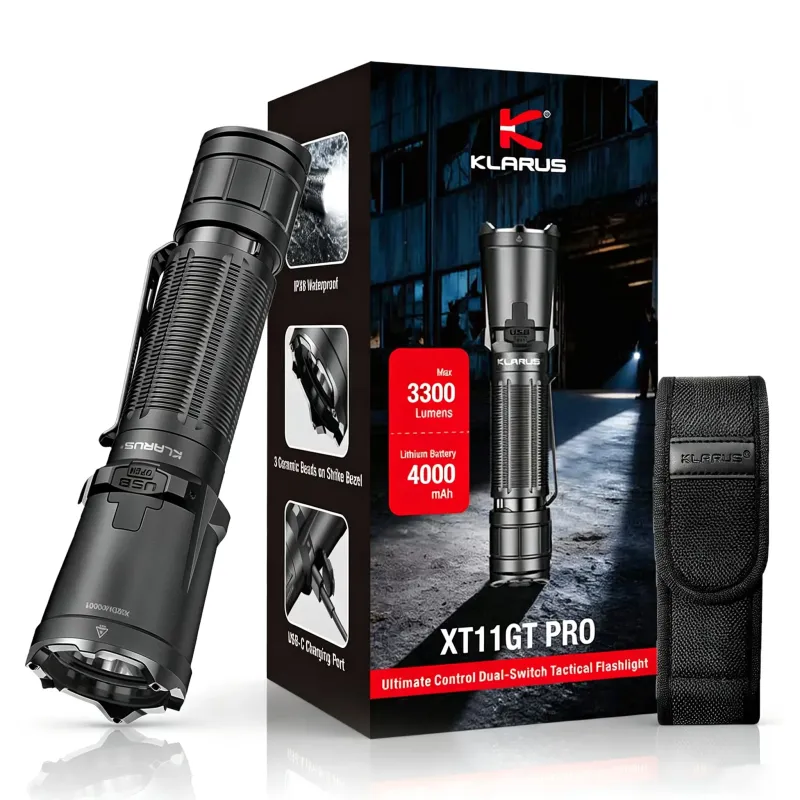
Klarus XT11GT PRO Tactical Flashlight
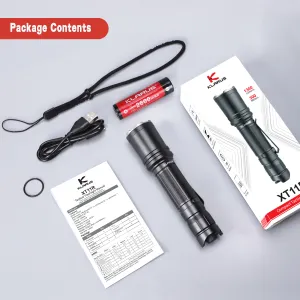
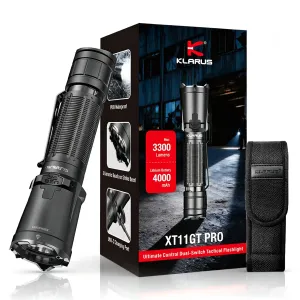
For patrol work the XT11GT PRO gives you 3300 lumens and a 410 m beam, with fifth-generation dual tail switches and a dedicated Turbo button plus a separate Strobe button, so maximum output or strobe comes on without cycling through settings. The aluminium alloy body is rated IPX8 and it charges over USB Type-C. It is a bigger, brighter torch than a pocket light, so it suits a duty belt or a vehicle rather than a shirt pocket.
Klarus XT12GT Pro
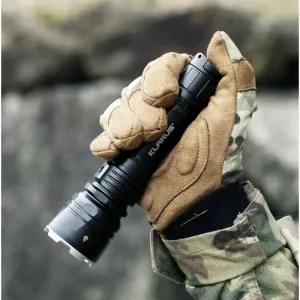
When the question is distance, the XT12GT Pro answers with 1600 lumens and an 850 m beam range from a Luminus SFT40 LED, a smooth reflector and 160,000 candela of beam intensity for identifying movement across open fields, farms and roads. Dual tactical tail switches give Turbo and Strobe access, and it carries IPX8 waterproofing with intelligent temperature protection. It is the narrowest beam of this group, so it is less suited to close indoor work.

How the four compare
| Torch | Beam type | Max lumens | Beam distance | Water rating |
|---|---|---|---|---|
| Klarus A3 | Twist zoom | 2200 | Up to 750 m | IPX6 |
| Klarus A1 Pro | Fixed | 1300 | 230 m | IPX6 |
| Klarus XT11GT PRO | Fixed | 3300 | 410 m | IPX8 |
| Klarus XT12GT Pro | Fixed | 1600 | 850 m | IPX8 |
How to choose
Start with the distance you actually need to see. If most of your work is within a few metres and occasionally you look far, a zoom covers it. If you routinely scan hundreds of metres, a fixed long-range reflector will serve you better.
Then weigh handling. Tail switches with a dedicated Turbo or Strobe button are quicker under pressure than cycling modes. A twist zoom is slower to change but gives you two beams from one body.
Water and dust matter too. IPX6 handles rain and splashes; IPX8 rated models are the ones to look at if the torch gets properly wet. Check how you will charge it, since USB Type-C on the torch saves carrying a separate charger.
Who should not buy a zoom torch? If your torch lives on a duty belt and you need the same beam every single time, or you rarely need close-up flood, the extra mechanism adds nothing. Equally, if your nights are mostly around the house, a 3300 lumen tactical torch is more light and weight than you need.
Frequently asked questions
Does zooming reduce brightness?
On most zoom torches the beam is spread over a wider or narrower area, so the hotspot looks dimmer when flooded and tighter when focused. The total output does not change, but how it lands does.
What is a good beam distance for a farm torch?
It depends on the size of your land. The A3 reaches up to 750 m in spot mode, while the A1 Pro is rated at 230 m, which covers a homestead and its immediate surroundings.
Can I use these torches in heavy rain?
The A3 and A1 Pro are rated IPX6 for rain and splashes, and the XT11GT PRO and XT12GT Pro carry IPX8. Match the rating to how wet the torch really gets.
Should I carry spare batteries?
The A3 accepts LiitoKala 21700 4000mAh cells if you already carry those, which is handy on long shifts away from a charger. On the others, charge over USB Type-C before heading out.
Pick the beam that matches your nights rather than the biggest number on the box: a zoom like the Klarus A3 if your work moves between close and far, a fixed long-range torch if distance is the whole job. Browse the torches at Lumen Vault, compare beam type and beam distance side by side, and choose the one you will actually carry.