There are really three kinds of garden sprinklers, and each suits a different job. Rotating sprinklers water lawns and small plots evenly. Impact heads last for years and handle rougher conditions. Rain guns cover serious farm acreage. Here is how they compare, with the models we sell in Kenya.
Rotating sprinklers: the lawn standard
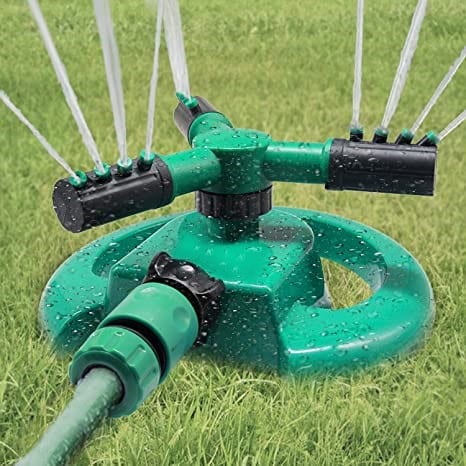
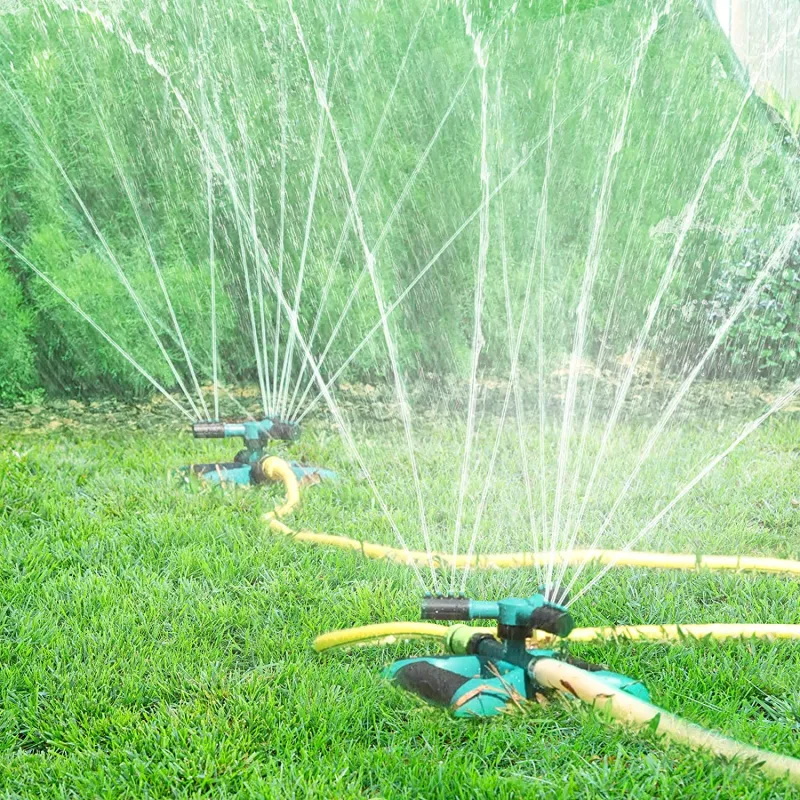
For most Nairobi compounds, a rotating sprinkler is the right tool. The ½ inch rotating garden sprinkler spins a 360 degree spray across a 10 metre radius, about 314 square metres per unit, and runs on tap pressure alone. The heads connect in series, so two units can cover a long narrow lawn from one tap.

The long-time best seller is the automatic 360 degree rotating sprinkler. Its three-arm design reaches 10 metres at 60 psi, and the spray angle adjusts from 45 degrees for wide coverage to 90 degrees for a tighter area. It is the sprinkler we recommend first to anyone with a lawn, because it does the standard job at a sensible price.
Brass impact sprinklers: built to last
Plastic sprinklers fade and crack after a few Kenyan summers. A brass impact sprinkler head does the same job in brass and stainless steel, adjusting from 0 to 360 degrees with a choice of nozzles. It is the head to pick for a permanent installation, a corner that gets knocked by feet and tools, or anywhere you would rather buy once than yearly. Pair it with a zinc spike base so it stands steady in the ground.
Rain guns: farm and large plot coverage
When the area is measured in acres, the 2 inch rain gun sprinkler is the answer. Its heavy duty metallic alloy body throws water up to 50 metres with a fully adjustable 360 degree pattern, covering roughly half an acre per unit. It is built for crop irrigation, and one unit on a riser can replace the slow work of moving a small sprinkler around a field.
Small parts that complete the system
The fittings are where systems come together or fall apart. A quick-connect hose connector joins sprayer to hose without leaks, and an adapter nipple fixes a thread mismatch in a minute. Both are the sort of part you buy once and forget, until they save you from a wet shoe and a flooded patch.
Which sprinkler should you buy?
- A lawn or flower beds at home: the 360 degree rotating sprinkler.
- A permanent corner that takes abuse: the brass impact head on a spike base.
- A farm or large plot: the 2 inch rain gun.
Need the water supply sorted before the sprinkler arrives? The hose and pipe guide covers bore sizes and lengths, and the full irrigation guide puts the whole system together.
Frequently Asked Questions
How many sprinklers do I need for my lawn?
One rotating sprinkler covers about 314 square metres (a 10 metre radius). Measure your lawn and divide by that to get the number, then place the heads so their circles overlap slightly.
Are brass sprinklers better than plastic?
For permanent installations, yes. Brass and stainless steel resist corrosion and cracking far longer than plastic under direct sun and pressure. For a cheap seasonal sprinkler, plastic is fine.
Can I connect sprinklers together?
Yes. Several of our rotating sprinklers are connectable in series from one tap. Just keep the total run short enough that pressure does not drop at the last head.
What is a rain gun used for?
Rain guns are for farms and large plots. A 2 inch model throws water up to 50 metres and covers about half an acre per unit, which makes crop irrigation practical without a full drip system.