Every irrigation setup in Kenya runs on the same backbone: the hose or pipe that carries water from the tap to the sprinkler. Choose the right bore and length and the system just works. Choose wrong and you get a limp spray at the far end, or worse, a burst line mid-season. This guide covers the three decisions, size, length and material, using the Coninx range we sell.
Decision 1: the bore size
The bore is the inside width of the hose, and it controls how much water can flow. Three sizes cover almost everything:
- 1/2 inch: the standard size for short runs and single sprinklers. Our 15 metre and 30 metre 1/2 inch Coninx hoses suit home gardens where the tap is close.
- 3/4 inch: the general purpose size for most farm rows and greenhouses. It carries noticeably more flow than 1/2 inch. Available in 15 metres, 30 metres and 50 metres.
- 1 inch: the widest bore, for long runs and commercial agriculture where volume matters. The 15 metre, 30 metre and 50 metre 1 inch lines move serious water over distance.
Decision 2: the length
Every metre of hose costs pressure. As a working rule: if your plot is more than about 30 metres from the source, step up a bore size instead of stretching a thin hose to its limit. The 1/2 inch line is a 15 to 30 metre hose. The 3/4 inch handles 30 to 50 metres for most gardens. The 1 inch is for the long runs, 50 metres and beyond, where a thinner line would starve the sprinkler.
Decision 3: the material
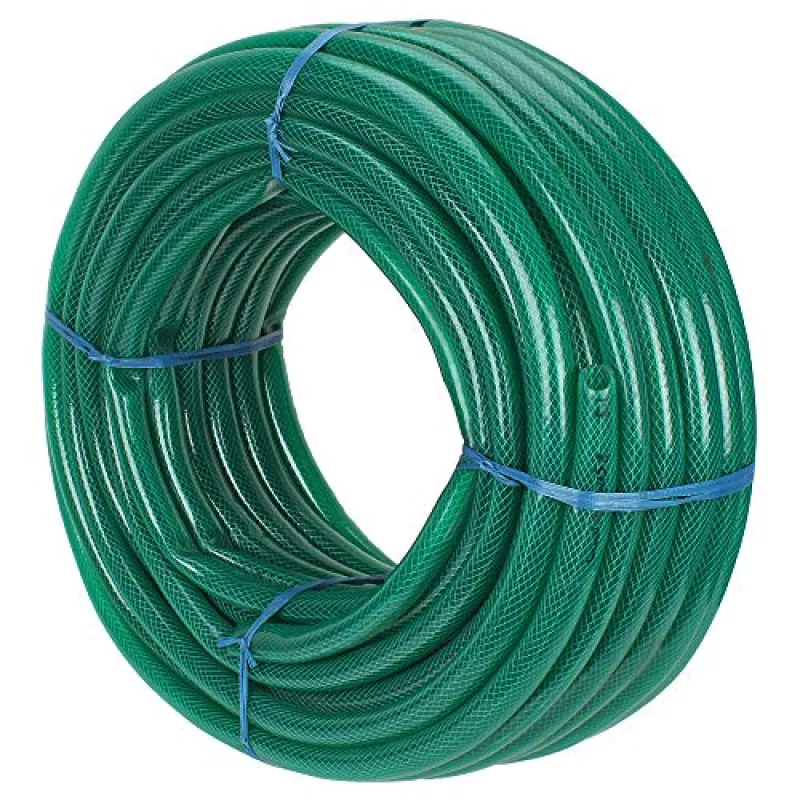
Cheap transparent hose goes green with algae in weeks and kinks at the worst moments. The Coninx hoses we sell avoid both problems:
- Opaque green walls block the sunlight algae need to grow inside the line.
- Braided, kink-resistant construction keeps water flowing around corners and across rough ground.
- UV and chemical resistance matters in the Kenyan sun and around fertiliser and treated water.
- 4.5 bar rating covers normal tap and borehole pressure with margin.
Fittings: the part everyone forgets
Hoses need connectors, and the fittings are sold separately. A quick-connect connector joins the hose to a sprayer or sprinkler without leaks, and a thread adapter sorts out mismatched sizes. Buy a spare of each; they are the smallest parts in the system and the ones that get lost.
The quick choice
- Home garden, tap nearby: 1/2 inch, 15 to 30 metres.
- Farm rows and greenhouses: 3/4 inch, 30 to 50 metres.
- Long runs and commercial plots: 1 inch, 50 metres.
Once the water reaches the sprinkler, the sprinkler guide takes over, and the irrigation guide shows how the whole system fits together.
Frequently Asked Questions
What size hose do I need for a sprinkler?
For a single sprinkler within 30 metres of the tap, 1/2 inch works. For longer runs or several sprinklers, use 3/4 inch or 1 inch so the flow and pressure hold up.
Why does my hose turn green inside?
Sunlight reaching the water allows algae to grow. Opaque hoses block that light. The Coninx green hoses are built specifically to prevent algae buildup.
Can I join two hoses together?
Yes, with a connector. But every join is a potential leak and a small pressure drop. Where possible, buy the length you need as one piece.
What pressure can these hoses handle?
The Coninx PVC hoses are rated to 4.5 bar, which covers normal Nairobi tap and borehole pressure with plenty of margin.