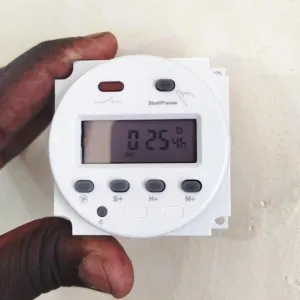
The most reliable gardener in Kenya is a timer. It waters at 5 a.m. when evaporation is lowest, switches off by itself, and never forgets. This guide shows how to build an automatic watering system from the parts we sell, starting with the cheapest option and working up.
Option 1: the timer plug, zero wiring
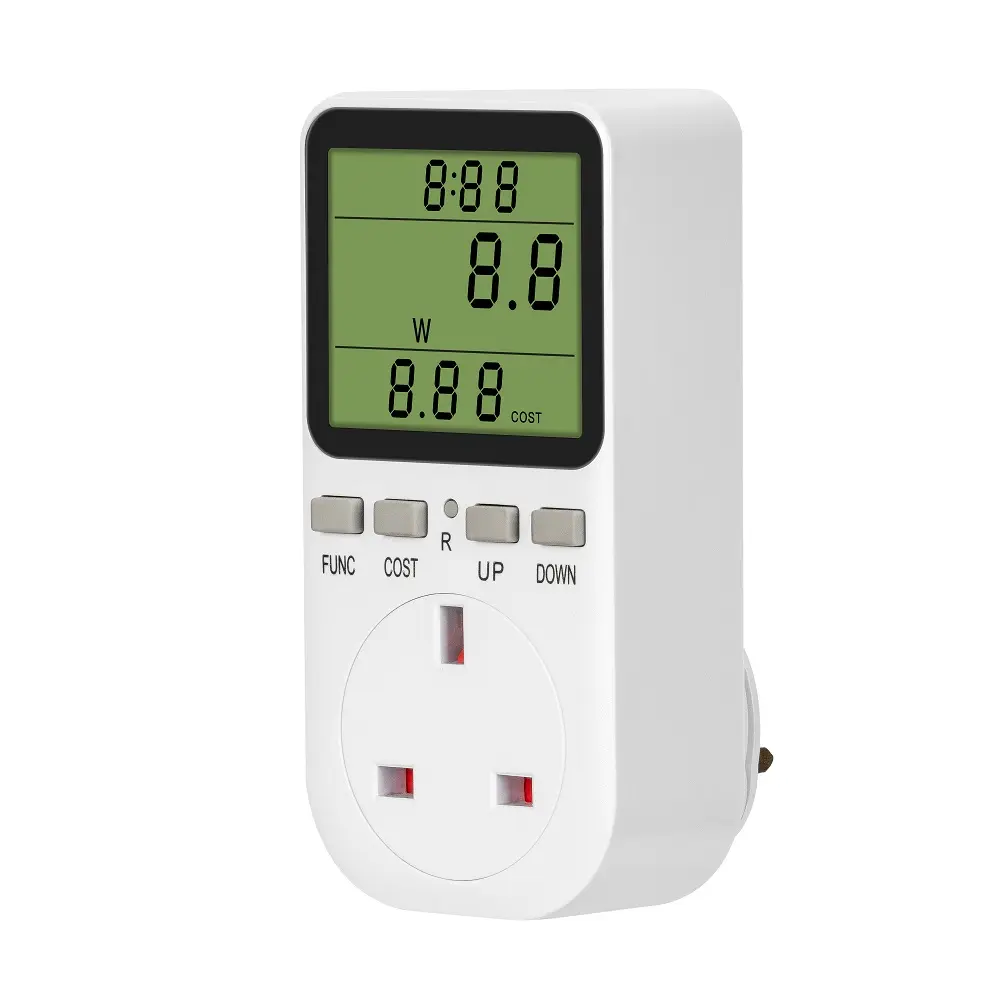
If your sprinkler or pump plugs into a socket, a plug-in timer is the fastest automation in Kenya. The Manhua MET-UK timer plug needs no wiring at all. Plug it in, set the daily or weekly schedule, and it switches the socket on and off for you. It has battery backup, so the schedule survives power cuts. This is the right answer for a single pump, a lawn sprinkler on a hose, or a pond filter.
Option 2: the DIN rail timer for a fixed system
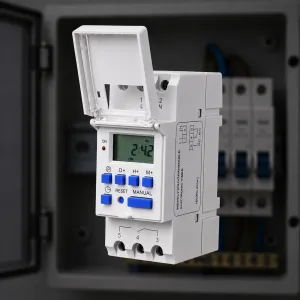
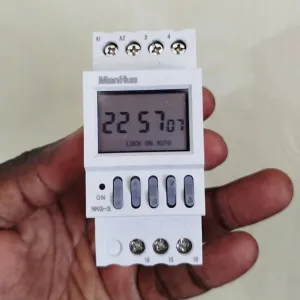
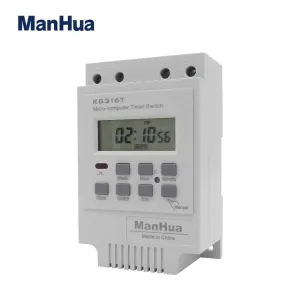
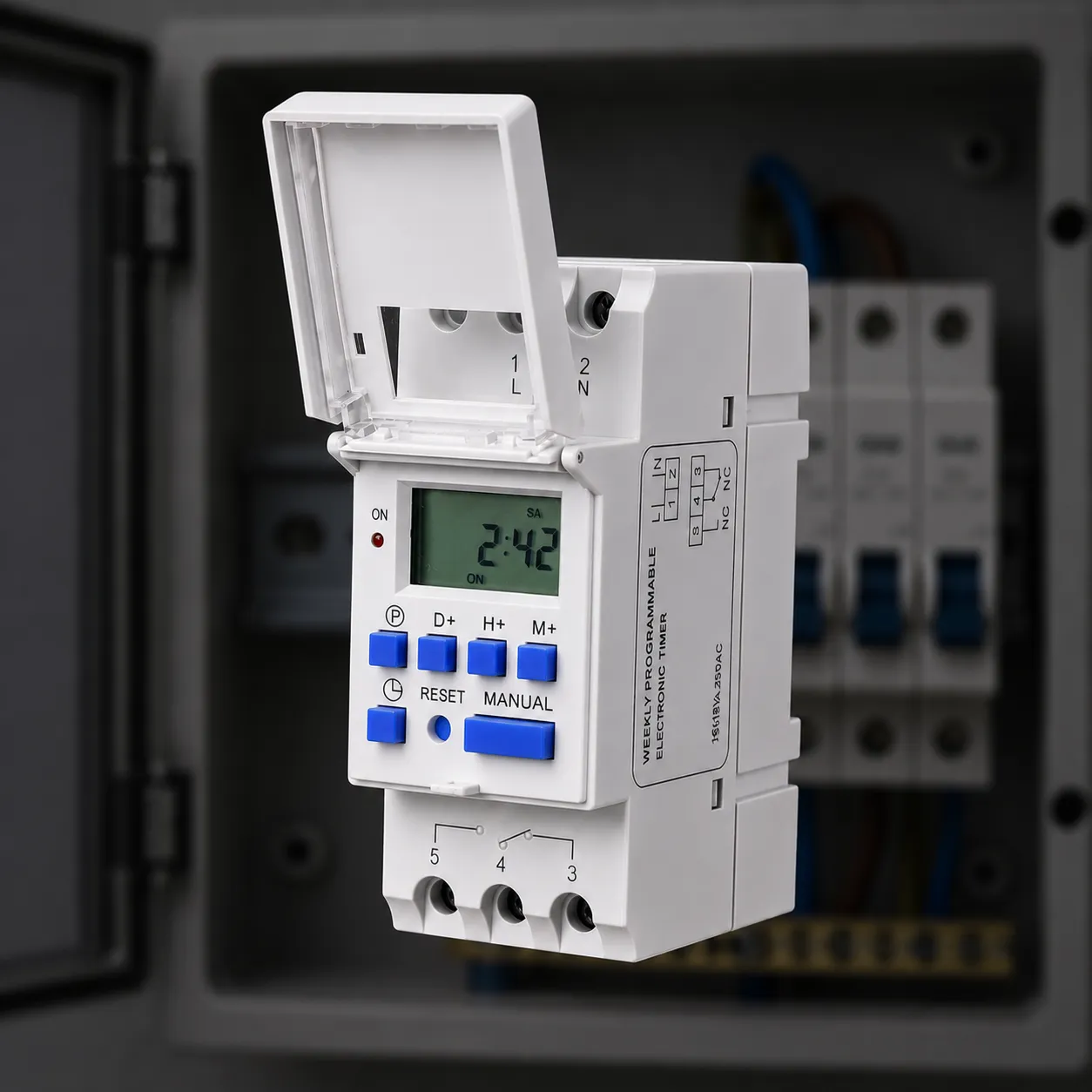
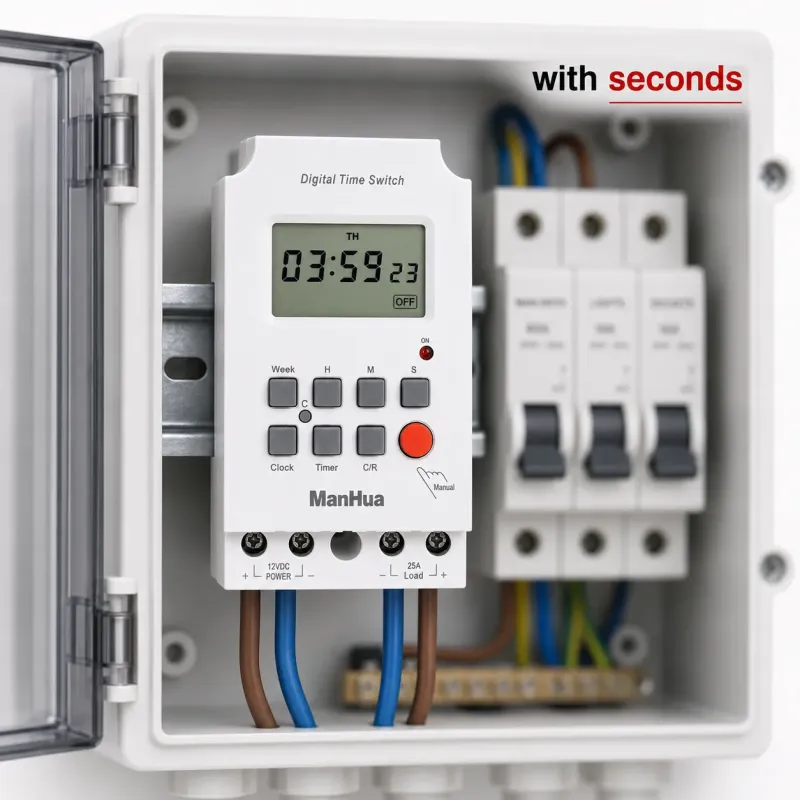
For a permanent installation wired into the distribution board, a DIN rail timer is the standard. Two models cover most needs:
- Manhua MT316S (AC, 25A) programs from 1 second up to 168 hours with 28 daily on/off settings. It is the workhorse for irrigation, school bells and machinery.
- Manhua MT316S 12V DC is the same idea for solar-powered systems, accurate to the second for short repeated cycles like pulsed irrigation.
For solar water pumps specifically, the Manhua MT619HPV is built for off-grid setups, with low power draw so it will not drain your battery bank while it waits.
Option 3: the WiFi valve, control from anywhere
The step up from a timer is a Tuya WiFi irrigation valve. It attaches to a standard 1/2 to 1 inch ball valve and turns it into an app-controlled tap. Water the garden from your office, pause during a sudden rain, or set schedules in the Smart Life app. It works with Alexa and Google Home and is IP65 rated for outdoor mounting. Note that it is a valve actuator, so it needs a lever ball valve fitted on the line.
The schedule that saves water
Automation only saves water if the schedule is right. Three rules we give customers:
- Water before sunrise. A 5 a.m. start loses far less to evaporation than midday watering, and the grass dries before evening, which reduces fungus.
- Deep and less often. Three short daily soaks encourage shallow roots. Two longer sessions a week build deeper roots that survive dry spells.
- Match the season. In the long rains, cut the schedule to once a week or off. The timer makes this a two-minute change.
Beyond watering: the same timers run lights and pumps
The same DIN rail timers that run irrigation also run security lighting, school bells, water pumps and fridges. The timer switch range covers AC and DC, single and three phase. For energy monitoring on top, the smart plug and energy monitor guide shows how to see exactly what each device costs to run.
And if you are starting from the sprinkler side, the sprinkler guide and the full irrigation guide cover the watering side of the system.
Frequently Asked Questions
Do I need an electrician to install a watering timer?
For the plug-in timer plug, no, it just goes into a socket. For a DIN rail timer wired into the distribution board, use an electrician unless you are comfortable with panel wiring.
Can a WiFi valve work without internet?
The schedules are stored in the valve itself, so basic on/off timing keeps working without internet. Remote control from the app needs WiFi, which is the whole point of the upgrade.
Will the timer keep my schedule during a power cut?
Yes. The timers we carry have battery backup that holds the schedule through outages. The MT102C DC timer holds its program for up to 60 days with no power at all.
What time should I water my garden in Nairobi?
Early morning, around 5 to 6 a.m., is best. Water evaporates far slower than at midday, and the lawn dries before evening, which keeps fungus away.