Nairobi nights get cold enough that most households end up buying a heater, and the question is always the same: oil-filled, quartz or fan? Each type heats differently, costs differently to run, and suits a different room. This guide explains the difference in plain terms, using the heaters we sell, so you buy the right one the first time.
Oil-filled radiators: slow, silent, steady
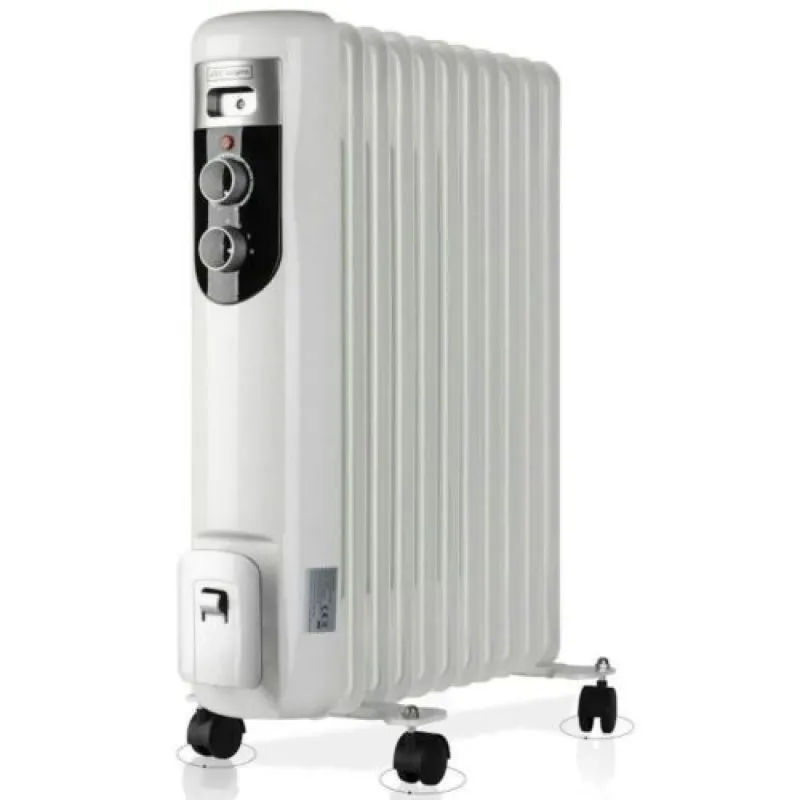
An oil-filled radiator warms oil inside sealed metal fins, and the fins radiate heat into the room. It takes a while to warm up, but it holds the heat and keeps the room warm without a fan and without a glowing element. That makes it the quietest option, and the safest around children, because the surfaces get warm rather than red hot, and there is no exposed element and no moving air. It is the type we recommend for bedrooms, nurseries and anywhere people sleep.
Oil heaters run on thermostats, so they warm the room to a set temperature and then cycle on and off rather than burning power all night. That is the main reason a bigger oil heater is not necessarily more expensive to run than a small one, it just reaches the target faster.
Quartz heaters: instant radiant warmth
A quartz heater uses halogen tubes behind a grill. Switch it on and you feel the warmth within seconds, no waiting for fins or oil. The catch is that it warms what is in front of it rather than the whole room, so it is best for a desk, a small office, a shop counter, or one person on a sofa. The element glows, the grill gets hot, and it needs to sit out of reach of children and pets. The heat stops the moment you switch it off, so there is no leftover warmth.
Fan heaters: fastest air, most noise
A fan heater pushes air over a heating element and blows it into the room. It is the fastest way to warm a room, minutes rather than half an hour, which makes it great for a home office on a cold morning. The trade-offs are noise and air movement. The fan is audible, and it stirs dust around, which matters in rooms with allergies or asthma. Fan heaters like the 2000W upright model also double as cool-air fans outside the cold season, which some buyers like.
Safety: what matters most in a Kenyan home
Three features matter regardless of type: tip-over protection (the heater switches off if it falls), overheat protection, and a stable base. For rooms with babies, the elderly or pets, an oil-filled radiator is the safe default, and we explain why in our safety guide. Whatever you buy, keep it a metre away from curtains and bedding and never run it on an extension that feels warm to the touch.
Running costs: the arithmetic
A heater is the most power-hungry appliance most homes own, so the running cost matters. The formula is simple: wattage divided by 1000 gives kilowatts, and kilowatts times hours times your KPLC rate per unit gives the cost. A 1000W heater on for 4 hours uses 4 units. Our running cost guide works through real examples so you know what each heater in our range costs per night before you buy.
Which heater should you buy?
- Bedrooms, nurseries, silent heat: oil-filled radiator. See the oil heater guide.
- Desk, office, shop counter: quartz heater. See the quartz heater guide.
- Fast warm-up for a whole room: fan heater.
Browse the full room heater range and match the size of your room to the wattage: roughly 100W per square metre is a safe starting point for a well-sealed room in Nairobi.
Frequently Asked Questions
Which heater is safest for a baby's room?
An oil-filled radiator. It has no glowing element, no fan, and its surfaces stay cooler than quartz or fan heaters. The Venus and 11-fin oil heaters we carry are the ones we suggest for nurseries.
Are oil heaters expensive to run?
They use the same electricity as any heater of the same wattage, but the thermostat cycles them on and off, so they do not burn power continuously once the room is warm. See the running cost guide for worked examples.
What size heater do I need for my room?
As a rough rule, plan on 100W per square metre for a sealed room. A 10 square metre bedroom wants around 1000W, a 15 square metre lounge around 1500 to 2000W.
Do quartz heaters heat the whole room?
No. They warm what is in front of them, so they suit desks, offices and one-person use. For whole-room warmth, oil-filled or fan heaters are the better choice.