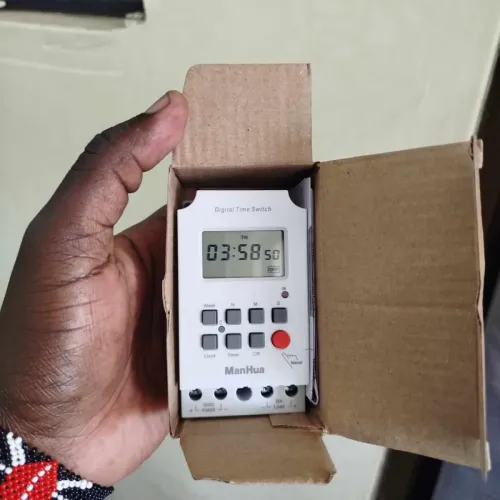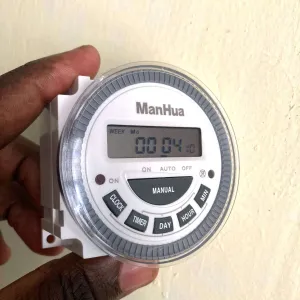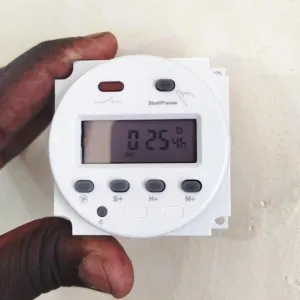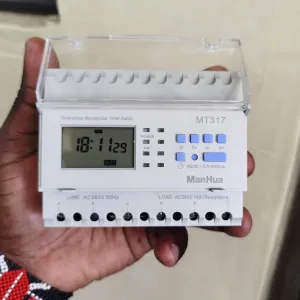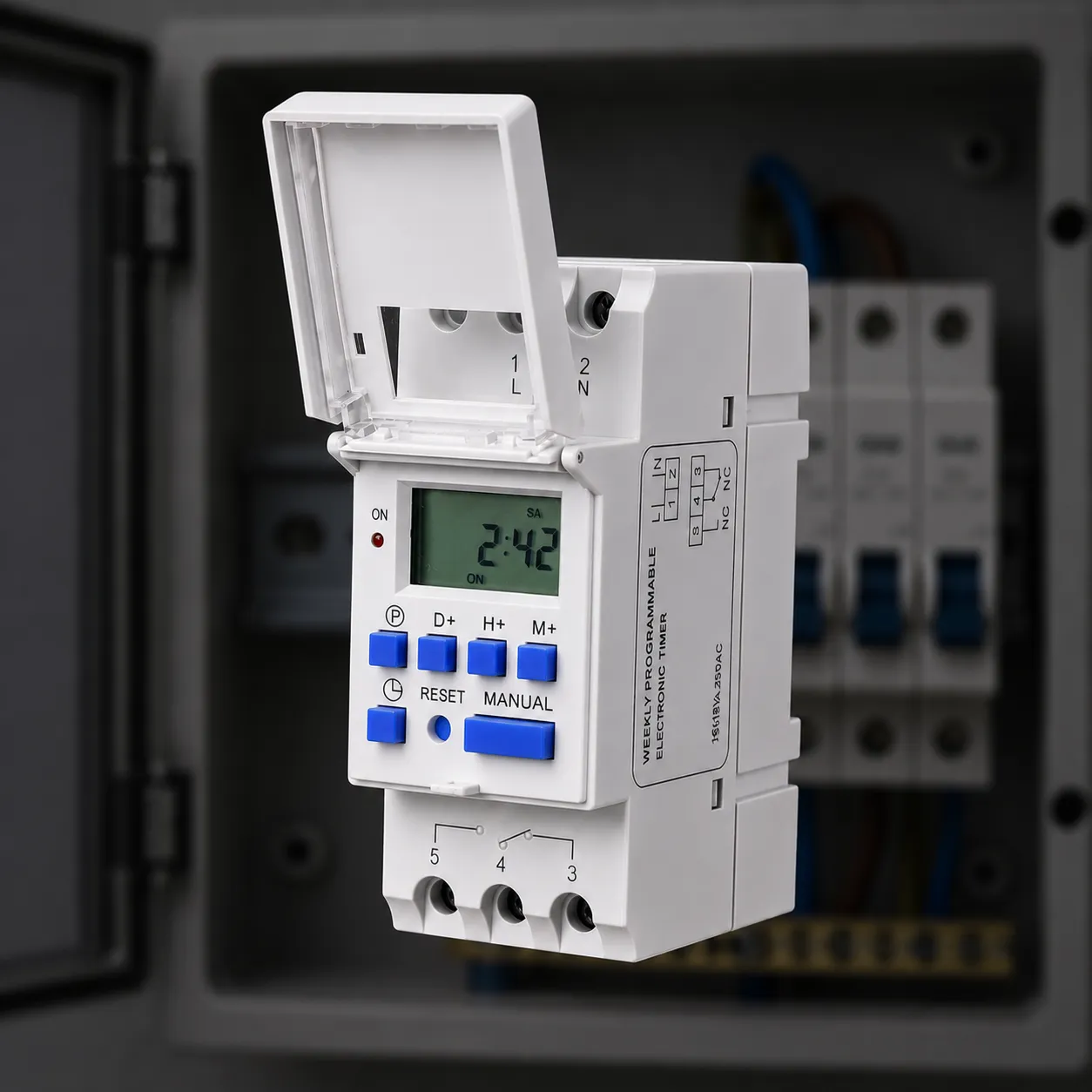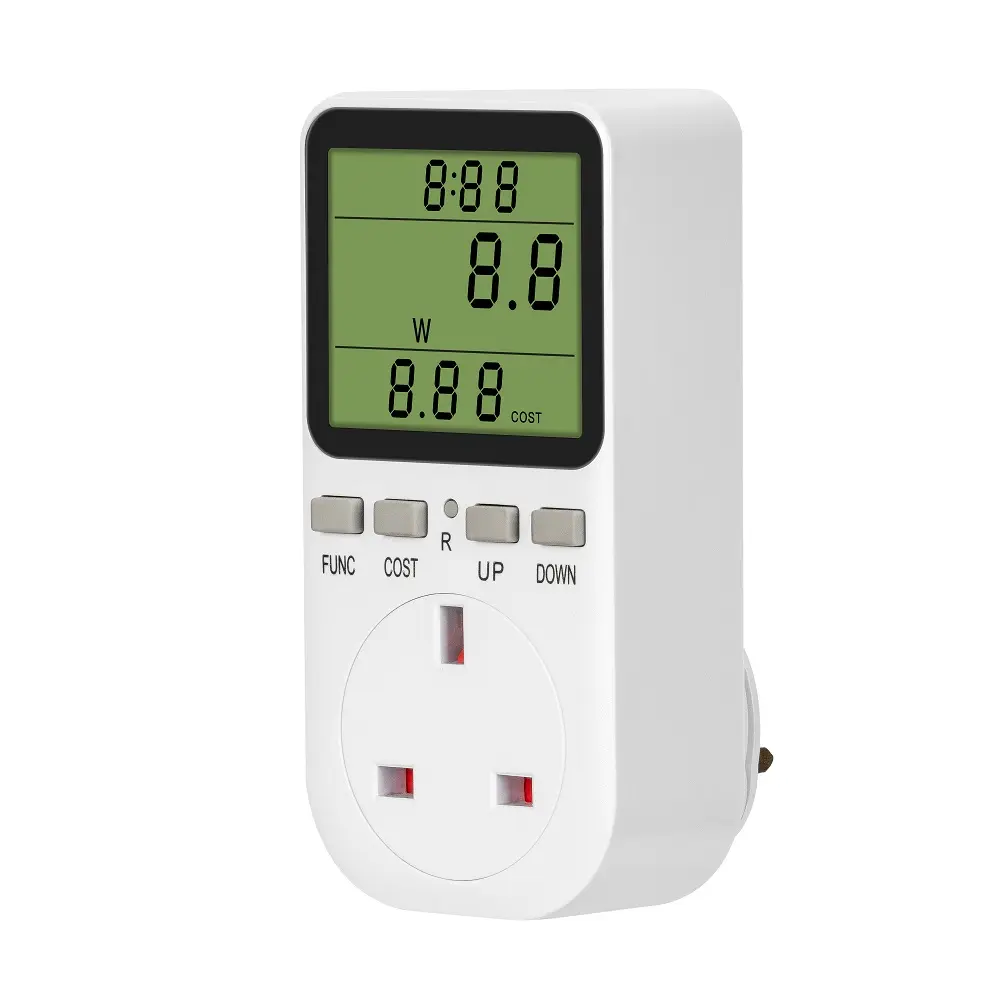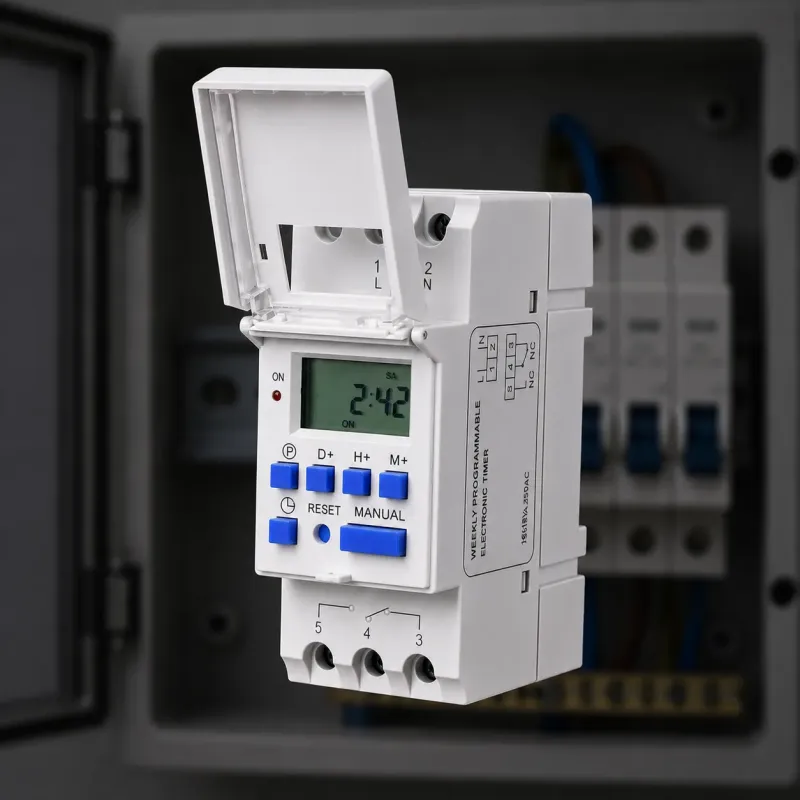
The Tronic timer switch is the mechanical plug-in timer you pick up at Carrefour for a few hundred shillings. The Manhua MT15 is the digital timer we sell that programs itself and survives blackouts. Both switch an appliance on and off on a schedule, and that is where the similarities end. Here is the honest comparison, because the right answer depends on what you actually need it for.
The Tronic timer at a glance
The Tronic is a 24 hour mechanical dial with pins. You push the pins down for the hours you want the appliance on, and it switches at those times every day. It plugs into a wall socket, needs no wiring, and costs in the range of a few hundred to about a thousand and a half shillings at Carrefour. It is perfect for one simple daily window.
The Manhua MT15 at a glance
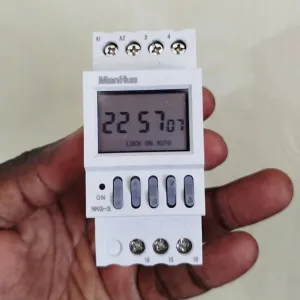
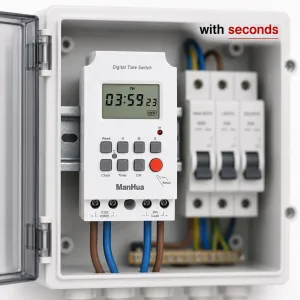
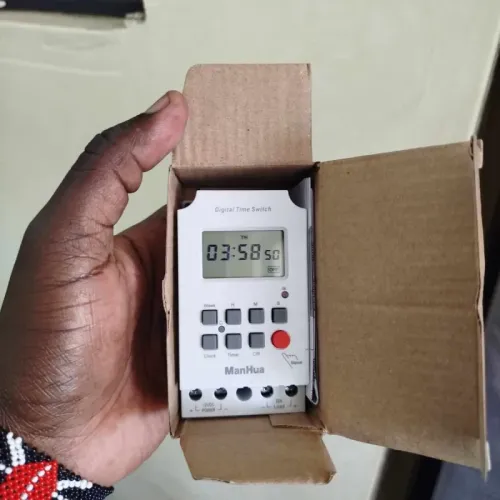
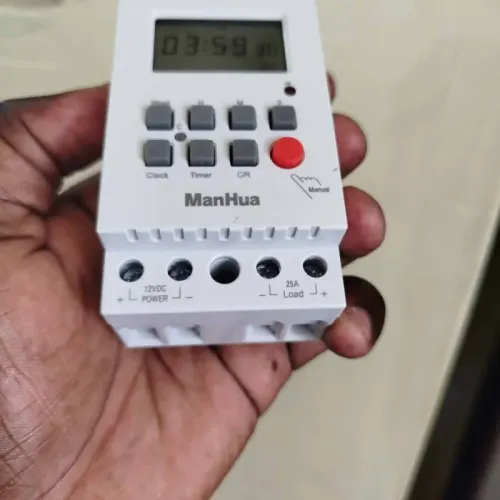
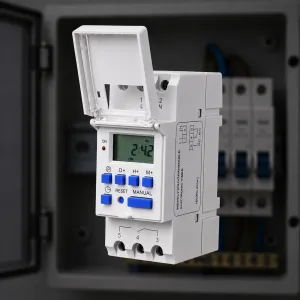
The Manhua MT15 is a digital timer switch with a small screen and buttons. It can hold up to ten on and off windows per day, runs different programs on weekdays and weekends, handles 16 amps, and keeps its time and program on a backup battery when the power goes off. It also plugs in and needs no wiring.
Side by side
| Tronic mechanical | Manhua MT15 digital | |
|---|---|---|
| On and off windows per day | One | Up to ten |
| Different weekday and weekend programs | No | Yes |
| Keeps settings through a power cut | No, the dial stops | Yes, battery backup |
| Load rating | About 10 to 13 amps | 16 amps |
| Time accuracy | Drifts over weeks | Minute accurate |
| Setting it up | Pins and a dial | Buttons and a screen |
When the Tronic is the right buy
If you need one appliance on at the same time every day, nothing more, then the Tronic does the job and costs less. A lamp from 6 pm to 10 pm, a chicken brooder heater at night, a phone charger in the shop. You set it once and it runs. The price difference at the counter is real, and if you do not have blackouts or multiple windows, spending more buys you nothing.
When the digital timer wins
Three situations push you to digital. First, more than one window a day: a shop that needs lights on at dawn, off at mid morning, on again in the evening. The Tronic cannot do that. Second, Nairobi blackouts: the Tronic dial stops when the power dies, so your times drift after every outage, and with Kenya Power that adds up. The MT15 keeps running on its backup battery. Third, anything where a missed window costs money, like a pump schedule or a fridge defrost cycle.
Other digital timers worth comparing
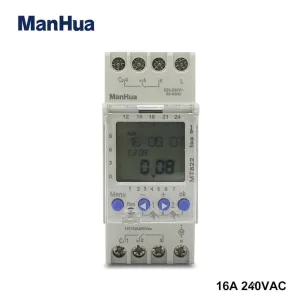
The MT15 is the everyday pick, but two more are worth knowing. The MT316S switches down to one second, which is what irrigation and school bells need. The MT822 astronomical timer is the one for streetlights and signage, because it can follow sunset and sunrise automatically instead of fixed times.
Verdict
Buy the Tronic if you want the cheapest possible one window a day and you do not care about blackouts. Buy the MT15 if you want programs that survive outages, more than one window, or different weekend settings. In Kenya, with the power situation as it is, most people who upgrade tell us the digital timer paid for itself the first time the lights came back on and the schedule was still correct.
See the full range of timer switches we stock, and if you are still on the fence, the step by step guide to setting both timers walks you through the Tronic first and then shows the digital shortcut.
New to timer switches? The step-by-step guide on how to set a Tronic timer switch covers the mechanical basics, and the Tronic timer switch price guide compares the Carrefour counter price with the online digital alternative.