<div class="calculation-box">
<strong>Steps:</strong>
<ol style="margin: 0.5rem 0 0 1rem; padding: 0;">
<li>Find the label with "W" or "Watts"</li>
<li>Note the wattage (e.g., 150W)</li>
<li>Multiply by hours used per day</li>
<li>Example: 150W × 24 hours = 3,600Wh (3.6 kWh)</li>
</ol>
<div class="formula">
Daily Consumption (Wh) = Wattage × Hours Used
</div>
</div>
<div class="warning-box">
<strong>Limitation:</strong> This shows maximum wattage, not actual usage. A fridge labeled "200W" might only use 100W on average because the compressor cycles on and off.
</div>
<h3>Method 3: Using Your KPLC Electricity Bill</h3>
<p>Your monthly token purchases or KPLC bill shows total consumption.</p>
<div class="calculation-box">
<strong>How to Calculate:</strong>
<div class="formula">
Monthly kWh ÷ 30 days = Daily Average kWh
</div>
<p style="margin: 0.5rem 0 0 0;"><strong>Example:</strong><br>
150 kWh/month ÷ 30 = <strong>5 kWh/day average</strong></p>
</div>
</section>
<!-- Calculation Example -->
<section class="category-section">
<h2>Step-by-Step: How to Calculate Total Power Usage</h2>
<p>Let us do a real calculation for a typical Kenyan home:</p>
<h3>Example: 3-Bedroom House in Nairobi</h3>
<div class="table-container">
<table class="comparison-table">
<thead>
<tr>
<th>Appliance</th>
<th>Wattage</th>
<th>Hours/Day</th>
<th>Daily Consumption</th>
</tr>
</thead>
<tbody>
<tr>
<td>TV (32")</td>
<td>100W</td>
<td>5 hrs</td>
<td>500Wh</td>
</tr>
<tr>
<td>Fridge</td>
<td>200W (when running)</td>
<td>~12 hrs active</td>
<td>2,400Wh</td>
</tr>
<tr>
<td>10 LED bulbs</td>
<td>10W each</td>
<td>6 hrs</td>
<td>600Wh</td>
</tr>
<tr>
<td>Laptop</td>
<td>50W</td>
<td>4 hrs</td>
<td>200Wh</td>
</tr>
<tr>
<td>Phone chargers (3)</td>
<td>10W each</td>
<td>3 hrs</td>
<td>90Wh</td>
</tr>
<tr>
<td>Decoder</td>
<td>20W</td>
<td>8 hrs</td>
<td>160Wh</td>
</tr>
<tr style="background: var(--primary); color: white; font-weight: 600;">
<td colspan="3">TOTAL</td>
<td>3,950Wh (3.95 kWh)</td>
</tr>
</tbody>
</table>
</div>
<div class="warning-box">
<strong>Your estimated daily consumption: ~4 - 6.5 kWh</strong><br>
To convert to monthly: 5 kWh × 30 days = <strong>150 kWh/month</strong><br><br>
<em>Note: Actual values vary based on appliance efficiency, usage patterns, and fridge cycling behavior.</em>
</div>
</section>
<!-- Common Mistakes -->
<section class="category-section">
<h2>Common Mistakes People Make When Measuring Power</h2>
<div class="warning-box">
<strong>Mistake 1: Guessing Instead of Measuring</strong>
<p style="margin: 0.5rem 0 0 0;">"I think my fridge uses about 100W" - Wrong! Measure it with a watt meter for accuracy.</p>
</div>
<div class="warning-box">
<strong>Mistake 2: Ignoring Peak Loads</strong>
<p style="margin: 0.5rem 0 0 0;">Your iron box (1,200W) + kettle (1,500W) + microwave (1,000W) = 3,700W theoretical peak. This is a worst-case scenario - these appliances are rarely used simultaneously, but your inverter must still handle the peak if they are.</p>
</div>
<div class="warning-box">
<strong>Mistake 3: Underestimating Fridge Usage</strong>
<p style="margin: 0.5rem 0 0 0;">People think: "It is just a small fridge." Reality: A fridge running 24/7 with compressor cycling can use 20 - 30% of your total power. Measure over 24 hours for accuracy.</p>
</div>
<div class="warning-box">
<strong>Mistake 4: Buying Solar Without Data</strong>
<p style="margin: 0.5rem 0 0 0;">Purchasing panels and batteries based on "what my neighbor has" instead of your actual needs leads to overspending or undersizing.</p>
</div>
</section>
<!-- Solar Sizing -->
<section class="category-section">
<h2>How This Helps When Installing Solar</h2>
<p>Once you know your exact power consumption, sizing your solar system becomes simple:</p>
<h3>Example: Home Using 5 kWh/Day (Adjusted for Real-World Factors)</h3>
<div class="table-container">
<table class="comparison-table">
<thead>
<tr>
<th>Component</th>
<th>Calculation</th>
<th>Recommended Size</th>
</tr>
</thead>
<tbody>
<tr>
<td><strong>Solar Panels</strong></td>
<td>5 kWh ÷ 5 sun hours = 1 kW<br>+ 30% for losses (dust, wiring, inverter)</td>
<td>~1.3 - 1.5 kW (4 - 5 panels × 300W)</td>
</tr>
<tr>
<td><strong>Battery Capacity</strong></td>
<td>For 1 day backup: 5 kWh<br>Account for depth of discharge:<br>• Lithium (80% DoD): 5 ÷ 0.8 = 6.25 kWh<br>• Lead-acid (50% DoD): 5 ÷ 0.5 = 10 kWh</td>
<td>Lithium: 6 - 8 kWh<br>Lead-acid: 10 - 12 kWh</td>
</tr>
<tr>
<td><strong>Inverter Size</strong></td>
<td>Peak load calculation:<br>Fridge (300W) + TV (100W) +<br>Lights (100W) + Laptop (50W) +<br>Kettle (1,500W) = ~2,050W worst-case</td>
<td>3 kW (to handle surges and future expansion)</td>
</tr>
</tbody>
</table>
</div>
<div class="warning-box">
<strong>Key considerations for Kenya:</strong>
<ul style="margin: 0.5rem 0 0 1rem; padding: 0;">
<li>Dust and haze can reduce panel output by 10 - 20% - clean panels regularly</li>
<li>Inverter efficiency losses: ~10 - 15%</li>
<li>Battery depth of discharge: never drain to 0% for longevity</li>
<li>Cloudy/rainy days reduce solar generation - size for worst-case or add grid backup</li>
</ul>
</div>
<div class="warning-box">
<strong>Without accurate measurements, you might buy a 5kW system when 3kW is enough - wasting over KES 100,000!</strong>
</div>
</section>
<!-- Product Recommendations -->
<section class="category-section">
<h2>Your Solution: Measure First, Buy Smart</h2>
<p>At Lumen Vault, we provide tools that help you measure your electricity usage accurately before you invest in solar.</p>
<h4>For Whole-House Monitoring:</h4>
<div class="product-grid">
</div>
<div class="warning-box">
<strong>Why measure first?</strong>
<ul style="margin: 0.5rem 0 0 1rem; padding: 0;">
<li>Ensures you buy the right system the first time</li>
<li>Identifies energy-wasting appliances you can replace</li>
<li>Helps you reduce bills even before going solar</li>
<li>Prevents costly mistakes and system failures</li>
</ul>
</div>
</section>
<!-- Internal Links -->
<section class="category-section">
<h2>Explore More Solar Solutions</h2>
<p>Need solar panels or other energy products? We have got you covered:</p>
<ul style="list-style: none; padding: 0;">
<li style="padding: 1rem; margin-bottom: 0.75rem; background: var(--light-bg); border-left: 4px solid var(--primary); border-radius: 0 8px 8px 0;"><a href="/product-category/solar-panels" style="color: var(--primary); text-decoration: none; font-weight: 600;">Shop solar panels for Kenya</a></li>
<li style="padding: 1rem; margin-bottom: 0.75rem; background: var(--light-bg); border-left: 4px solid var(--primary); border-radius: 0 8px 8px 0;"><a href="/product-category/solar-inverters" style="color: var(--primary); text-decoration: none; font-weight: 600;">Browse solar inverters and batteries</a></li>
<li style="padding: 1rem; margin-bottom: 0.75rem; background: var(--light-bg); border-left: 4px solid var(--primary); border-radius: 0 8px 8px 0;"><a href="/blog/solar-system-sizing-guide" style="color: var(--primary); text-decoration: none; font-weight: 600;">Read: Complete solar system sizing guide</a></li>
<li style="padding: 1rem; margin-bottom: 0.75rem; background: var(--light-bg); border-left: 4px solid var(--primary); border-radius: 0 8px 8px 0;"><a href="/blog/kplc-token-saving-tips" style="color: var(--primary); text-decoration: none; font-weight: 600;">Read: How to save on KPLC tokens</a></li>
</ul>
</section>
<!-- FAQ Section -->
<section class="faq-section">
<h2>Frequently Asked Questions</h2>
<div class="faq-item">
<div class="faq-question">
<span>How do I measure my home electricity consumption in Kenya?</span>
<svg class="toggle-icon" viewBox="0 0 24 24"><path d="M12 5v14M5 12h14"/></svg>
</div>
<div class="faq-answer">
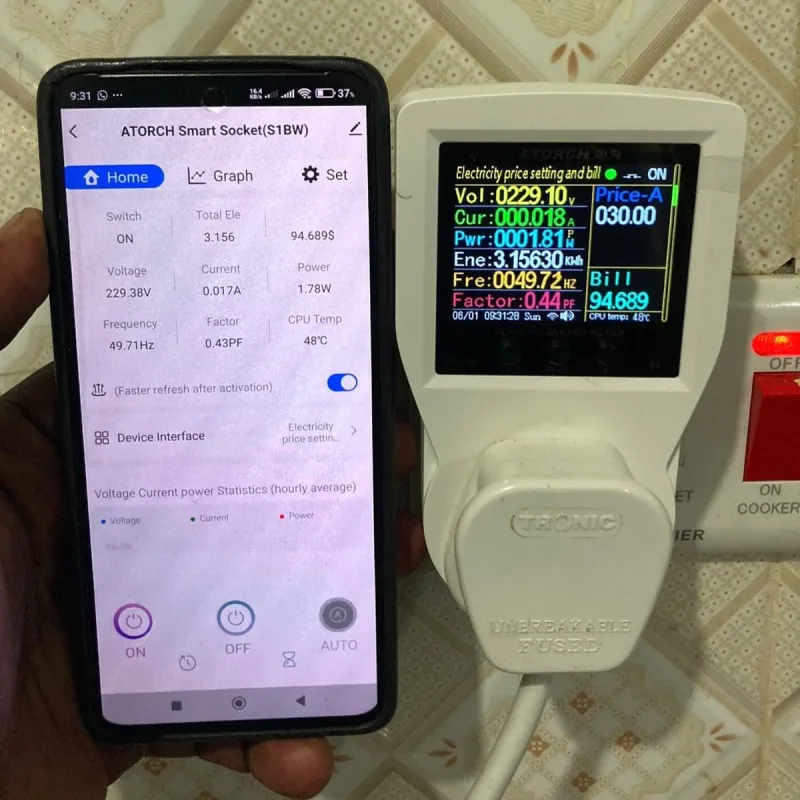
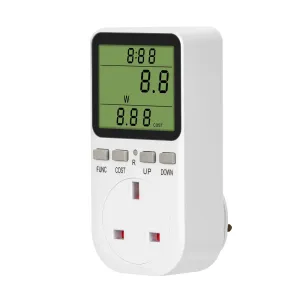
The most accurate method is using a watt meter socket like the Atorch S1 or MANHUA TG44ME. Plug it into your wall socket, connect your appliance, and read real-time power usage. You can also check appliance labels or calculate from your KPLC bill, but these are less precise.
</div>
</div>
<div class="faq-item">
<div class="faq-question">
<span>What size solar system do I need for a typical Kenyan home?</span>
<svg class="toggle-icon" viewBox="0 0 24 24"><path d="M12 5v14M5 12h14"/></svg>
</div>
<div class="faq-answer">
A typical 3-bedroom Kenyan home uses 5-8 kWh per day. This requires approximately 2-3 kW of solar panels (6-10 panels of 300W), a 10-15 kWh battery bank for 1-2 days backup, and a 3-5 kW inverter depending on peak load. However, you should measure your actual usage first for precise sizing.
</div>
</div>
<div class="faq-item">
<div class="faq-question">
<span>Can I use my KPLC bill to estimate solar system size?</span>
<svg class="toggle-icon" viewBox="0 0 24 24"><path d="M12 5v14M5 12h14"/></svg>
</div>
<div class="faq-answer">
Yes, but with limitations. Divide your monthly kWh usage by 30 to get daily average consumption. However, this does not show which appliances use the most power or your peak load, which are critical for sizing inverters and batteries correctly.
</div>
</div>
<div class="faq-item">
<div class="faq-question">
<span>What appliances use the most power in Kenyan homes?</span>
<svg class="toggle-icon" viewBox="0 0 24 24"><path d="M12 5v14M5 12h14"/></svg>
</div>
<div class="faq-answer">
High consumption appliances include electric cookers (1,000-1,500W), electric kettles (1,500-2,000W), water heaters (2,000-3,000W), and iron boxes (1,000-1,200W). Medium consumption includes fridges (150-300W) and washing machines. Low consumption includes LED bulbs (5-15W) and phone chargers (5-25W).
</div>
</div>
<div class="faq-item">
<div class="faq-question">
<span>How accurate are watt meters for measuring electricity?</span>
<svg class="toggle-icon" viewBox="0 0 24 24"><path d="M12 5v14M5 12h14"/></svg>
</div>
<div class="faq-answer">
Quality watt meters like those from Atorch and MANHUA have an accuracy of ±1%, which is sufficient for home energy audits and solar system sizing. For best results, measure appliances over 24-48 hours to account for cycling, especially for fridges and air conditioners.
</div>
</div>
<div class="faq-item">
<div class="faq-question">
<span>Why is measuring electricity important before installing solar?</span>
<svg class="toggle-icon" viewBox="0 0 24 24"><path d="M12 5v14M5 12h14"/></svg>
</div>
<div class="faq-answer">
Measuring helps you size your solar system correctly, prevents battery overload, avoids buying too many or too few panels, and helps reduce electricity bills by identifying energy-wasting appliances. Without accurate measurements, you risk overspending or installing an undersized system that cannot handle your load.
</div>
</div>
</section>
<!-- Conclusion -->
<section class="category-section">
<h2>Final Advice: Choose Smart, Measure First</h2>
<p>Buying the right solar system for your Kenyan home does not have to be confusing. Just remember these three steps:</p>
<ol style="padding-left: 1.5rem; margin: 1rem 0;">
<li style="margin-bottom: 0.75rem;"><strong>Know your consumption:</strong> Measure your actual power usage with a watt meter before making any purchases. Account for appliance cycling and real-world usage patterns.</li>
<li style="margin-bottom: 0.75rem;"><strong>Think about your needs:</strong> Do you need backup for load shedding? Do you want to power high-consumption appliances? Match your system to your actual usage patterns and factor in efficiency losses.</li>
<li><strong>Do not skip accuracy:</strong> Always use proper measurement tools and consult with solar experts. Your investment - and your peace of mind - are worth it.</li>
</ol>
<p>Whether you are a homeowner in Nairobi keeping the lights on during blackouts, a business owner in Mombasa reducing operational costs, or a family in Kisumu planning for energy independence - measuring your electricity consumption first makes your solar journey easier, safer, and more cost-effective.</p>
<p><strong>Ready to start measuring?</strong> Browse our full range of <a href="/product-category/energy-meters" style="color: var(--primary); font-weight: 600;">watt meters and energy monitors in Kenya</a> and find the perfect tool for your needs today.</p>
</section>
</article>
</div>
</main>
<script>
// FAQ Toggle
document.addEventListener('DOMContentLoaded', function() {
const faqQuestions = document.querySelectorAll('.faq-question');
faqQuestions.forEach(function(question) {
question.addEventListener('click', function() {
const faqItem = this.closest('.faq-item');
const isActive = faqItem.classList.contains('active');
document.querySelectorAll('.faq-item').forEach(item => item.classList.remove('active'));
if (!isActive) faqItem.classList.add('active');
});
});
});
// Scroll animation
const observer = new IntersectionObserver((entries) => {
entries.forEach(entry => {
if (entry.isIntersecting) {
entry.target.style.opacity = "1";
entry.target.style.transform = "translateY(0)";
}
});
}, { threshold: 0.1, rootMargin: "0px 0px -40px 0px" });
document.querySelectorAll('.product-card, .faq-item, .category-section').forEach(el => {
el.style.opacity = "0";
el.style.transform = "translateY(15px)";
el.style.transition = "all 0.5s ease-out";
observer.observe(el);
});
</script>
</body>
</html>" frameborder="0" sandbox="allow-scripts allow-same-origin" style="width:100%;min-height:400px;border:0;display:block;">
Practical guides, buying advice and product comparisons for everyday life in Kenya, written by the Lumen Vault team and linked to the products we stock.